
Travel Writing
How to Write a Travel Article That Takes Readers Along
A scene-first method for turning a real trip into a travel article with a strong angle, useful notes, and a satisfying finish.
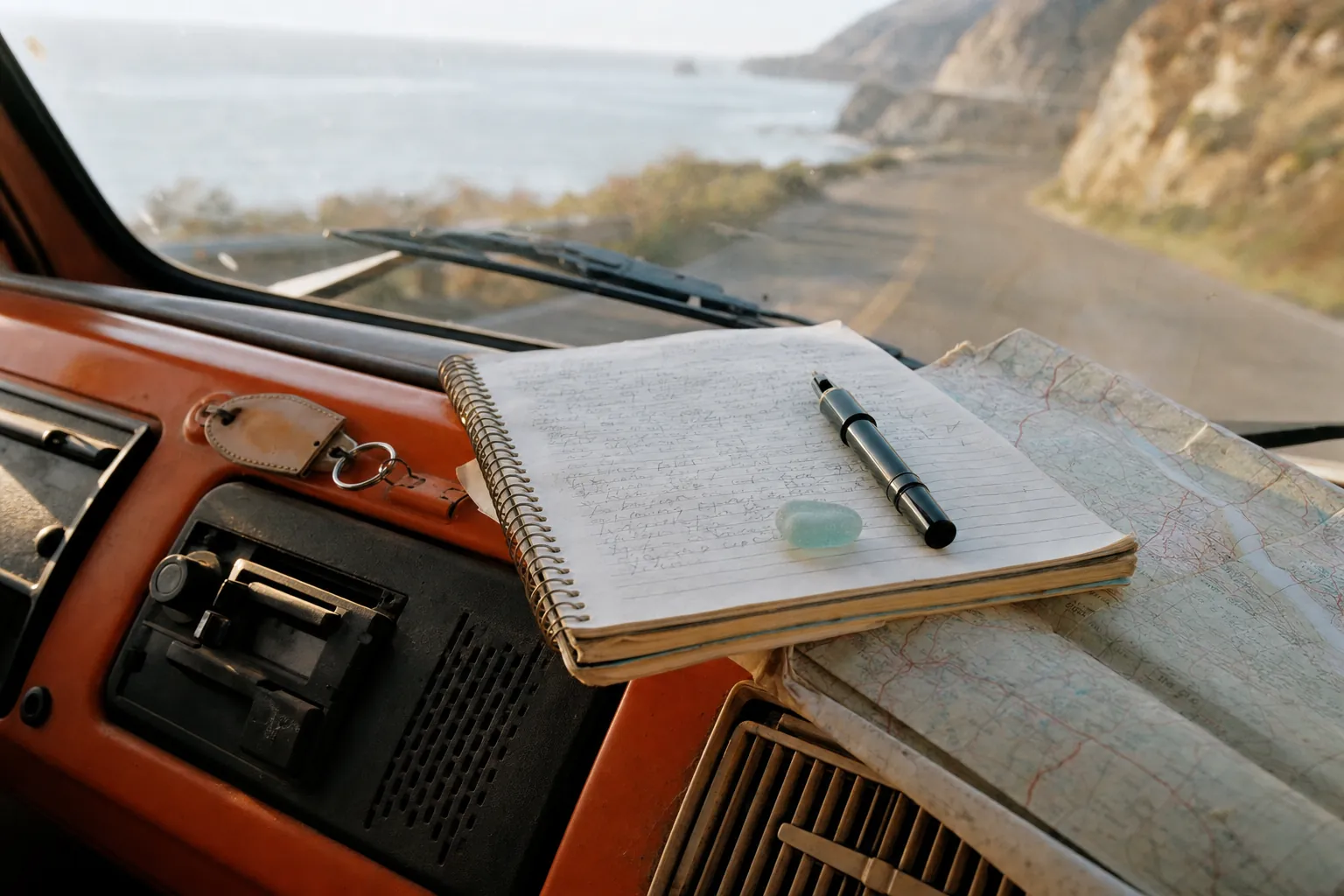
A travel article begins before the first sentence. It begins when you decide that the trip is not the subject. The subject is the thing the trip revealed: the bridge that closed at the wrong time, the beach that looked different after a storm, the friend who knew the road better than the map, or the old van that turned a simple drive into a small test of nerve.
That decision saves a writer from the most common trap, the diary of events. A reader does not need every meal, mile, and museum ticket. They need a place they can picture, a reason to care, and a thread worth following from the first paragraph to the last. The Purdue OWL travel-writing workshop makes a useful case for specific imagery and representative moments instead of a laundry list. That is a sound place to start.
G.J.’s own road writing has the raw material a travel article needs: old highways, Key West light, a beloved VW, surprise, and enough wrong turns to keep a story honest. Use the following process to turn that kind of material into an article that gives a reader more than directions.
1. Choose one angle, not the whole trip
Before you write, finish this sentence: “This article is really about...” If the answer is “our week in Florida” or “my summer road trip,” keep looking. Those are itineraries. An angle is more precise: a rain-soaked drive that changed the plan, learning a town through its breakfast counter, returning to a beach after years away, or finding out that the slowest route was the right one.
A good angle creates a question. Will the van make the next town? Why does this familiar place feel strange now? What did the writer misunderstand at the beginning? The answer does not need to be dramatic. It simply needs to give the experience direction.
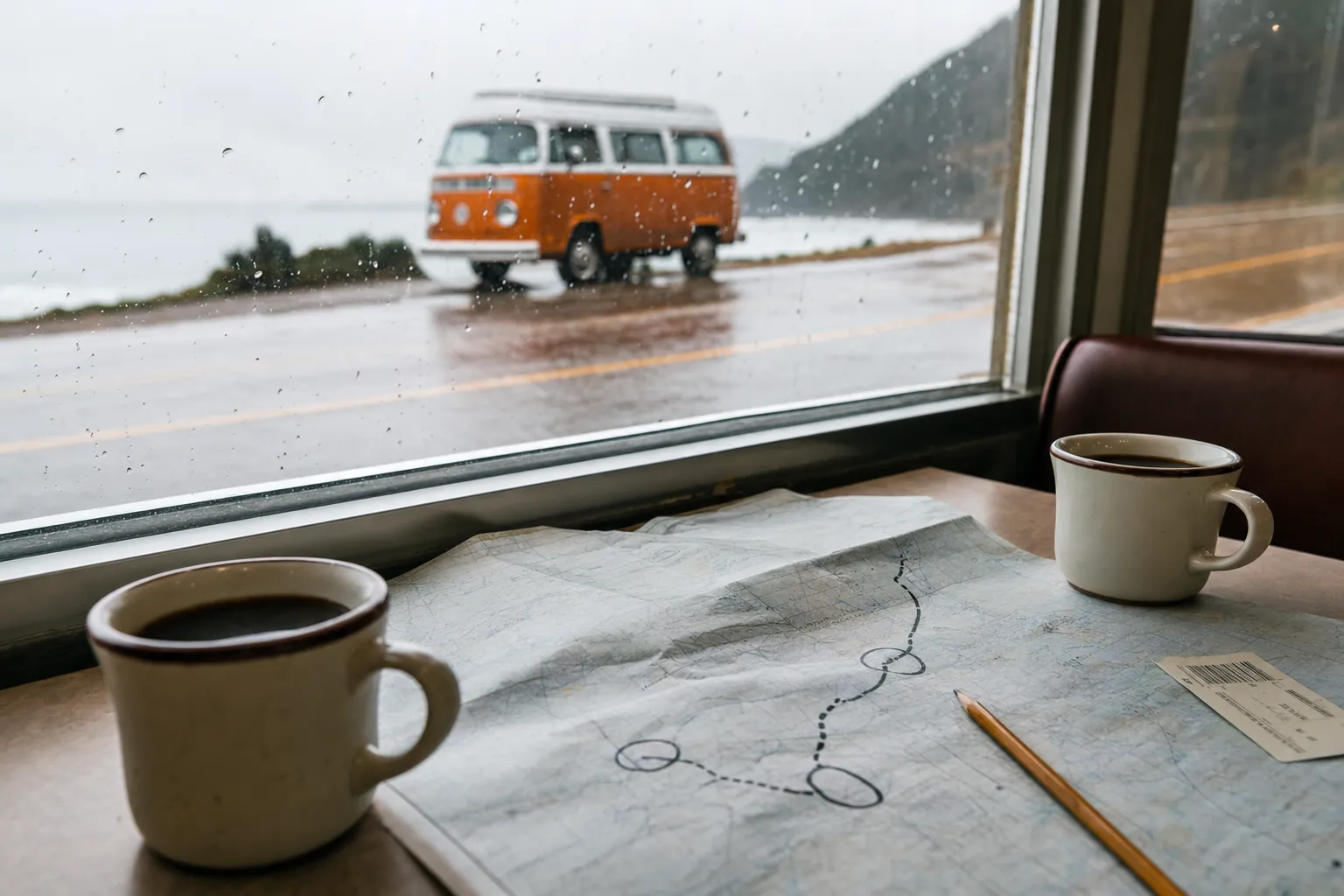
Try writing three possible angles before choosing one. For a coastal drive, they might be “chasing a storm,” “the last diner before the bridge,” or “what a breakdown taught us about patience.” Pick the one with the strongest tension. The rest of the trip can appear as context, but it should not take over the article.
For an example of an ordinary trip finding its real pressure, read G.J.’s Rude Awakening Road Trip (Part 1). The road matters because money, mileage, and a temperamental vehicle keep pushing against the original plan.
2. Decide who the article is for
A travel article can serve different readers. Someone planning a visit may want a clear sense of place and practical context. Someone who loves essays may be looking for voice, memory, and a compelling scene. A piece for fellow writers may show how you noticed the detail that made the story work. You do not need to announce the audience in the article, but you should know who you are taking along.
That choice affects what you include. A reader considering a road trip may appreciate the texture of the road, the weather, and the little decisions that made the day. A literary reader may stay longer with the memory, conversation, or realization inside the scene. The best version does both when it can: it makes the place useful without draining the life out of it.
Keep a simple promise in mind: by the end, what will the reader understand, feel, or see more clearly? A piece about Key West might promise the sensation of arriving in the off-season. A piece about an old camper might promise the odd freedom and responsibility of traveling in something with a personality. The page for Prelude to a Groovy Road Trip shows how much character one 1970 VW can carry when it becomes part of the journey rather than a prop.
3. Gather details that prove you were there
Readers trust a travel article when it contains the details that memory does not invent by accident. Not “the beach was beautiful,” but the color of the glass after the tide went out. Not “the motel was cheap,” but the plastic key tag, the air conditioner that sounded like a truck, and the salt that had dried on the windshield before breakfast.
These details do more than decorate the prose. They establish place, reveal mood, and tell the reader what the writer noticed. Write them down while you can. A phone note, a receipt with one sentence on the back, a quick voice memo, or a small notebook will do the job.
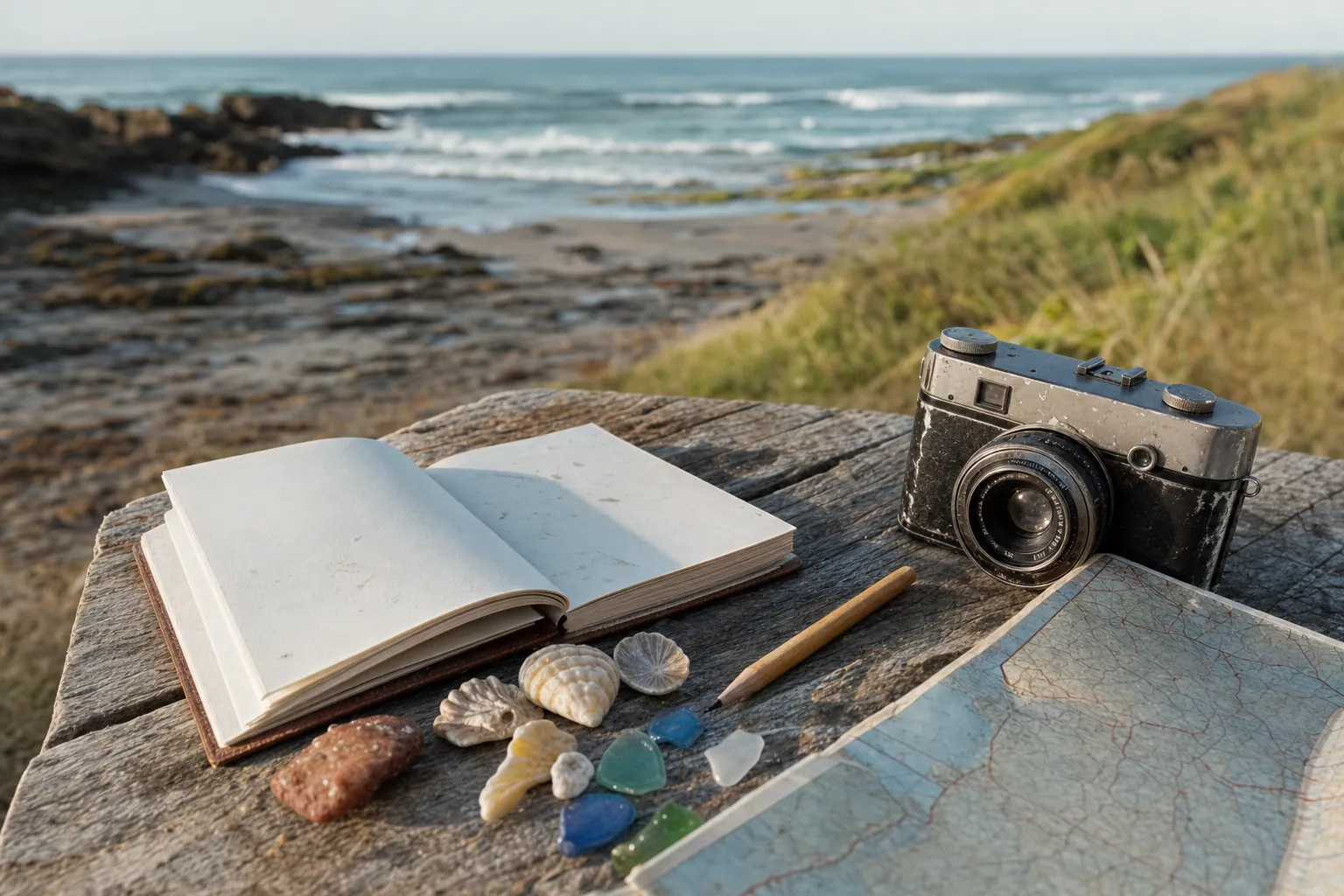
- One exact image: a weathered dock, a crooked motel sign, a wet map on the dash.
- One sound or smell: bait warming in the sun, a ferry horn, coffee in a diner booth.
- One line of dialogue: the phrase that changed the air in the scene.
- One surprise: something the day did not go as planned.
- One question: the thought you are still carrying when you leave.
The earlier Journal guide, Travel Writing Examples: Make a Place Come Alive, goes deeper on turning those details into sentences that let a reader stand inside the scene. Here, the important thing is to collect more than you will use. Later, you can choose the few details that do the most work.
Photographs can help with recall, but they are not a substitute for notes. A photograph may show the color of a harbor while missing the gull that would not stop pecking at a lunch bag, the smell of diesel on the dock, or the silence after someone said the one thing nobody expected. Keep the facts that a camera cannot hold. They are often the details that make a travel article feel lived rather than merely illustrated.
4. Do just enough research to make the place honest
Firsthand observation is the heart of travel writing, but it is not a license to guess. Check the name of the bridge, the history of the neighborhood, the date of the hurricane, the local custom you did not understand, or the person whose story you are telling. A small factual correction can keep a lovely paragraph from becoming careless.
Research belongs where it changes the meaning of the moment. If you cross a bridge built after a storm, the fact matters when the weather closes in. If a neighborhood was remade after a fire, the history matters when a local points out what used to be there. Otherwise, let the reader stay with the scene.
When you write about a community that is not yours, be modest about what a brief visit can teach you. Let people be people, not scenery. Attribute conversations. Check what you think you know. G.J.’s Key West - In Loving Memory has weight because it comes from a relationship with a place, not a stack of postcard claims.
5. Build the article around scenes and bridges
A scene slows down for a moment that matters. It has a place, someone doing something, one or two sensory details, and a small change by the end. A bridge moves the reader between scenes: “By the time we reached the coast...” or “The next morning...” Both are necessary. The trick is to spend your space where the story has heat.
Start with a scene that has immediate pressure. Do not warm up with the weather report or a paragraph explaining how long you have wanted to take the trip. Let the reader hear the engine sputter, see the motel clerk slide the key across the counter, or feel the rain arrive at the exact wrong moment. Then step back to give them the context they need.
This is where many pieces turn into a list. If a paragraph only proves that you visited somewhere, cut it or compress it into a bridge. The University of North Carolina Writing Center’s guidance on flow is useful here: readers follow when the pattern of the piece is clear, whether it is chronological, grouped by idea, or built around a repeating image. Choose the pattern that best carries your angle.
For a reminder that the road itself can become a source of momentum, read Road Trippin’. The pleasure comes from the motion and the attitude, not an exhaustive record of the miles.
6. Let the narrator show up, but leave room for the world
Travel articles need a point of view. A reader wants to know whose eyes are on the road. Your impatience, humor, fear, appetite, and mistaken assumptions make the experience personal. But the article gets thin if every paragraph circles back to the writer. Let the place push back. Let a stranger’s phrasing, a change in weather, or an object on a counter have some room of its own.
One useful test is to look at every paragraph that begins with “I.” Some will be right. Others may become stronger when the scene takes the lead. Instead of “I was nervous in the old van,” try showing the hand hovering over the temperature gauge while traffic begins to pile up behind you. The reader will meet the narrator through the evidence.
The same restraint works with emotion. You do not have to tell readers that a sunset was moving or a departure was sad. Give them the empty passenger seat, the cooled coffee, the last glimpse of the shoreline, or the photo you did not take. Specific objects carry feeling farther than general declarations.
Honesty also gives the narrator credibility. A trip can be disappointing, uncomfortable, expensive, or plain awkward without becoming a complaint. Those moments are often where a place stops behaving like a postcard and becomes real. Include them when they reveal something, then resist the temptation to make yourself the hero of every inconvenience. A reader trusts a traveler who can admit the rain won, the directions were wrong, or the grand plan needed a smaller ending.
7. Revise until the journey has a shape
The first draft is where you put the trip on the table. The revision is where you decide what the article is actually about. Read once for structure. Does the opening scene create a question? Does each section move the reader toward an answer? Does the ending arrive somewhere different from the beginning?
Read again for language. Cut the phrases that tell the reader what to feel: breathtaking, hidden gem, unforgettable, paradise. Replace them with the thing that earned the feeling. The UNC Writing Center’s advice on concision is practical for this stage. Let the objects, choices, and scenes do their work instead of explaining the obvious twice.
Finally, read the piece aloud. Your ear will catch the sentence that runs too long, the paragraph that repeats itself, and the spot where the ending stays after the article has already landed. Cut with confidence. A travel article is not a record of everything that happened. It is the version of the journey that gives the reader a reason to remember it.
Start with the road you already know
You do not need an exotic destination to write a travel article. The road out of town, a favorite beach after a storm, a ferry ride you have made for years, a diner just before the state line, or an old neighborhood seen with new eyes can all hold a story. Choose the moment that still has a little pressure in it. Write that scene first. The rest of the trip will tell you whether it belongs.
For more of G.J.’s original work, browse the writing archive and the books. The strongest travel writing usually begins with close attention, then follows the long way around until it finds the part worth bringing home.
Frequently asked questions
Travel article questions
What should a travel article include?
A useful travel article needs a clear angle, concrete scenes, dependable context, and a reason the experience matters. It does not need to report every stop on the itinerary. Choose the moments that help a reader understand the place, the people, and the change in the journey.
How do I choose a topic for a travel article?
Choose the part of the trip that still has a question in it. A bad ferry crossing, a beach after a storm, a diner conversation, a difficult road, or a return to a familiar town can all give an article shape. The best topic is usually narrower than the whole vacation.
How long should a travel article be?
Let the story set the length. A short magazine-style piece may focus on one scene in 800 words, while a more layered essay may need several thousand. Every paragraph should either make the place clearer, move the experience forward, or deepen the meaning of the journey.
Do travel articles need research?
Yes, when a fact, history, or local detail helps readers understand the place. Research should support firsthand observation rather than replace it. Check names, dates, and context, then use only the details that make the scene more accurate or meaningful.
Keep wandering
Related posts
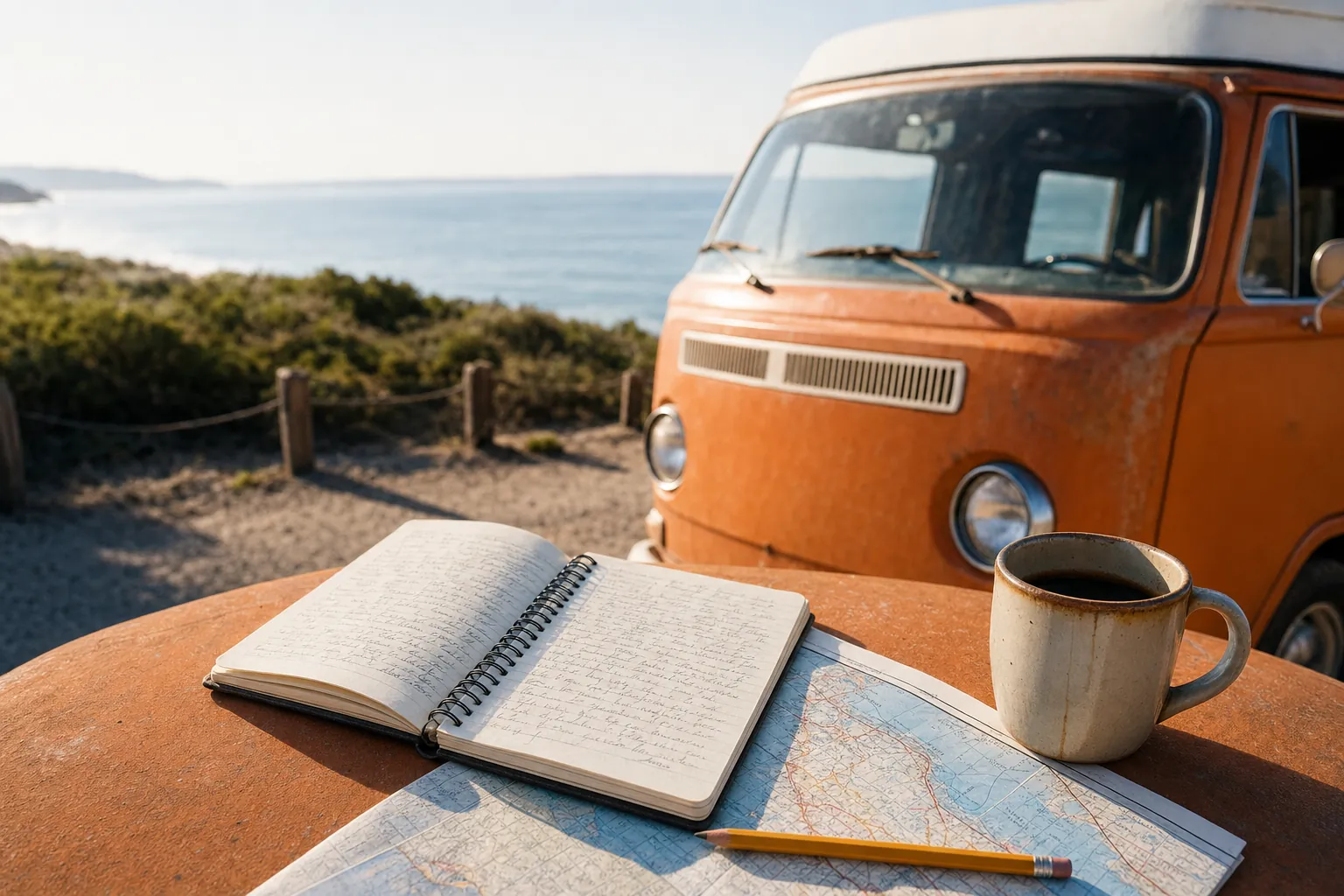 Travel Writing
Travel Writing Examples: 5 Short Scenes That Bring a Place Alive
Five short travel writing examples with practical notes on adding vivid detail, tension, voice, and a shape that keeps readers moving.
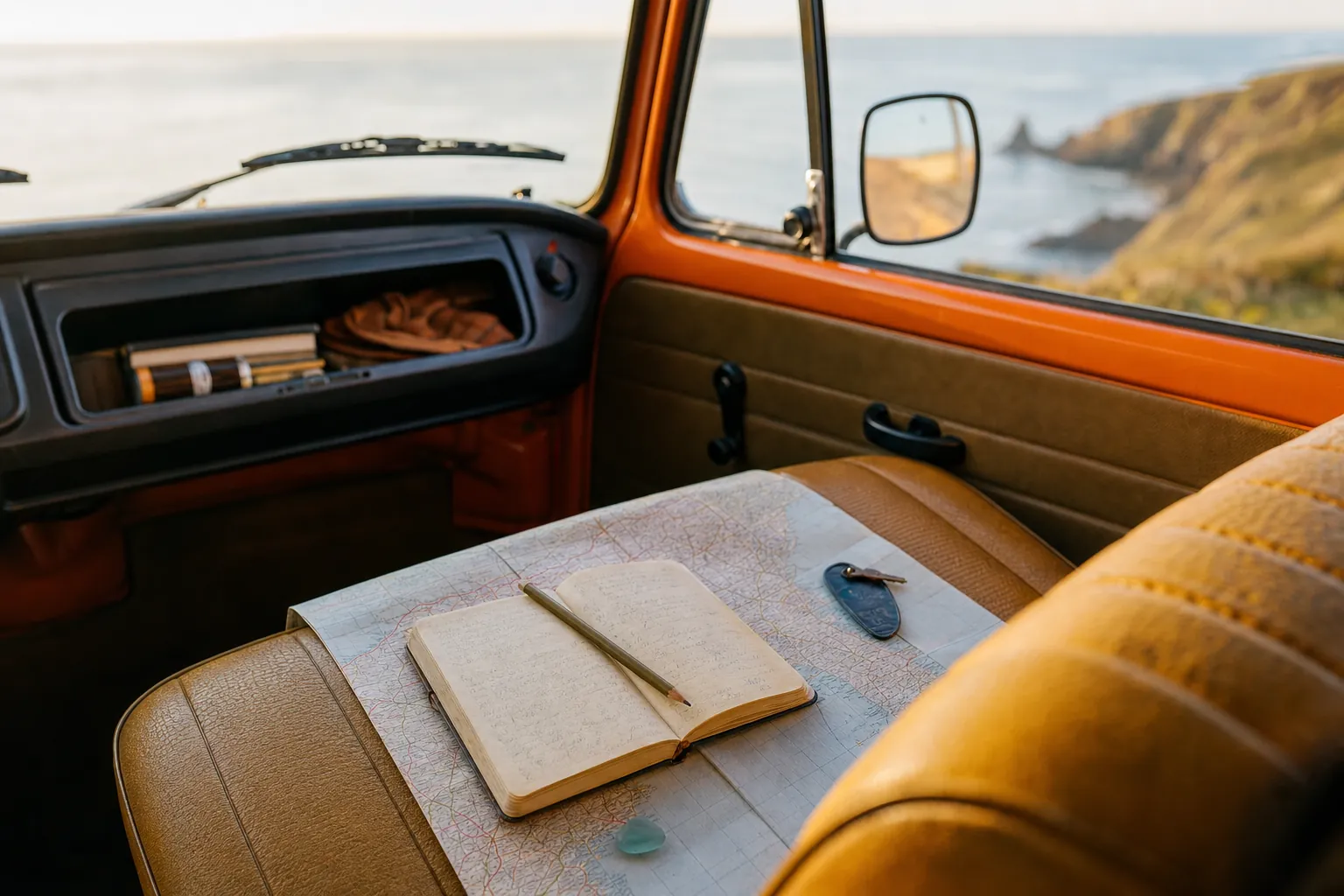 Travel Writing
How to Write a Travel Narrative That Goes Somewhere
Learn what a travel narrative is, then turn a trip, detour, or familiar road into a story with a scene and a turning point.
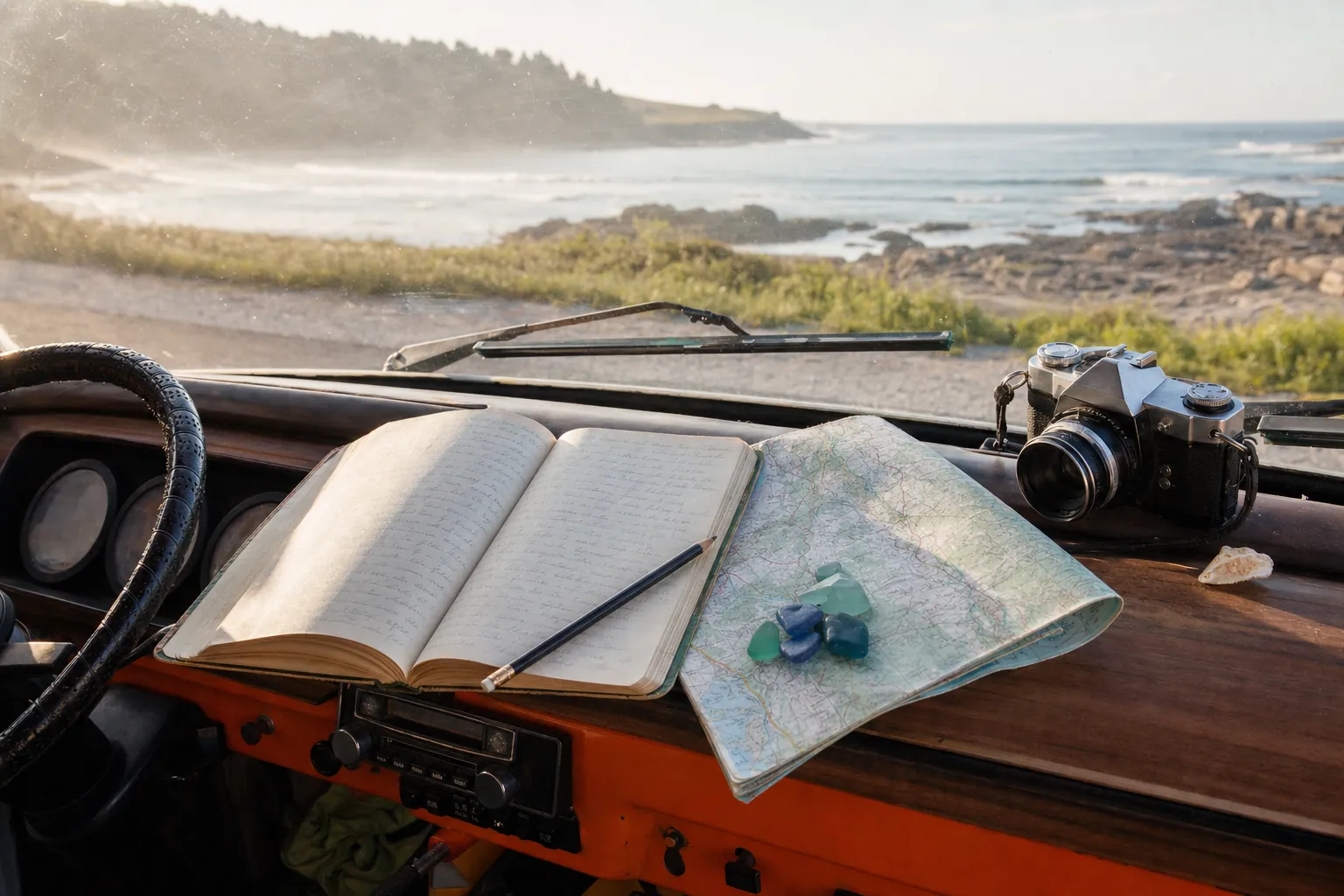 Travel Writing
What Is Travel Writing? A Guide to Seeing the Road
An introduction to travel writing: what it is, what it does, how it differs from a guidebook, and the details that make a place stay with a reader.