
Travel Writing
What Is Travel Writing? A Guide to Seeing the Road
An introduction to travel writing: what it is, what it does, how it differs from a guidebook, and the details that make a place stay with a reader.
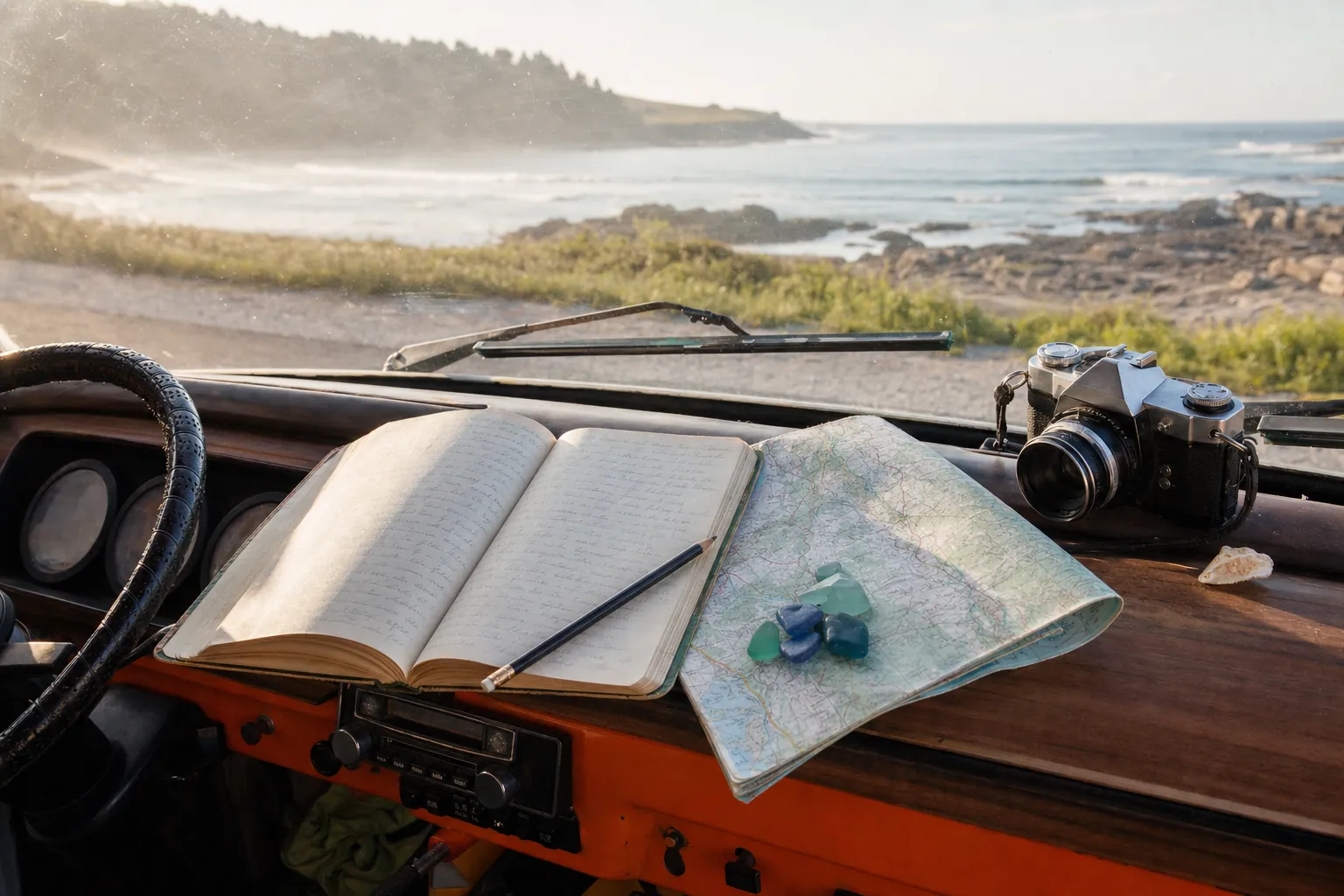
Travel writing is nonfiction that uses a journey, a place, and a writer's point of view to help a reader experience something more than an itinerary. It is not a list of places you went. It is the story of what a place did to your attention. A road, a ferry, a bus station, a beach after rain, or a diner at the edge of town becomes travel writing when it gives a writer something more than scenery to report.
The journey is the frame, but the real material is the moment inside it: a map that stops making sense, a stranger who says the one thing you needed to hear, an old hotel key, a shoreline you thought you knew, or the feeling that a familiar route has quietly changed. The best pieces take readers somewhere, then let them see why the trip stayed with the person telling it.
Travel literature is a wide field that can include essays, memoir, travelogues, and guidebooks. EBSCO's overview of travel literature traces that range. For a writer, the useful distinction is simple: a guidebook helps someone plan a trip, while travel writing lets them inhabit an experience.
The key characteristics of travel writing
Good travel writing usually brings together four things: a real place, a personal point of view, specific detail, and some kind of movement or change. It may be a short article, an essay, a memoir chapter, or a travelogue. The form changes, but the reader should feel that the writer has noticed something worth carrying home.
- A place with texture. Not a postcard claim, but the weather, people, sounds, objects, and history that make the setting particular.
- A point of view. The writer's attention gives the journey its shape, choosing what belongs in the story and why it matters.
- Scenes and reflection. The work moves between what happened and what the writer came to understand.
- An honest encounter. The people, places, and events are treated truthfully, with curiosity instead of borrowed certainty.
The purpose is not simply to recommend a destination. Travel writing helps a reader see a place through another person's experience, whether the result is useful, entertaining, reflective, or all three. For a closer look at turning those elements into a story, read the Journal's travel narrative guide.
Travel writing begins with a point of view
Two people can walk the same boardwalk and come home with different stories. One notices the chipped paint on the bait shop door. Another remembers the girl singing to herself at the end of the pier. A third cannot stop thinking about the silence after a call from home. The place is shared. The attention is not.
That is why travel writing needs a point of view. It does not mean every paragraph has to begin with “I.” It means the writer makes choices about what belongs in the frame. The scent of wet rope, the fruit stand radio, the uncomfortable motel chair, and the bend in the road where the weather turns are all evidence of a person actually being there.
G.J.'s Key West - In Loving Memory does not treat Key West like a set of postcard claims. It shows a relationship with the island, its characters, memories, and history. The setting becomes meaningful because it is filtered through lived experience.
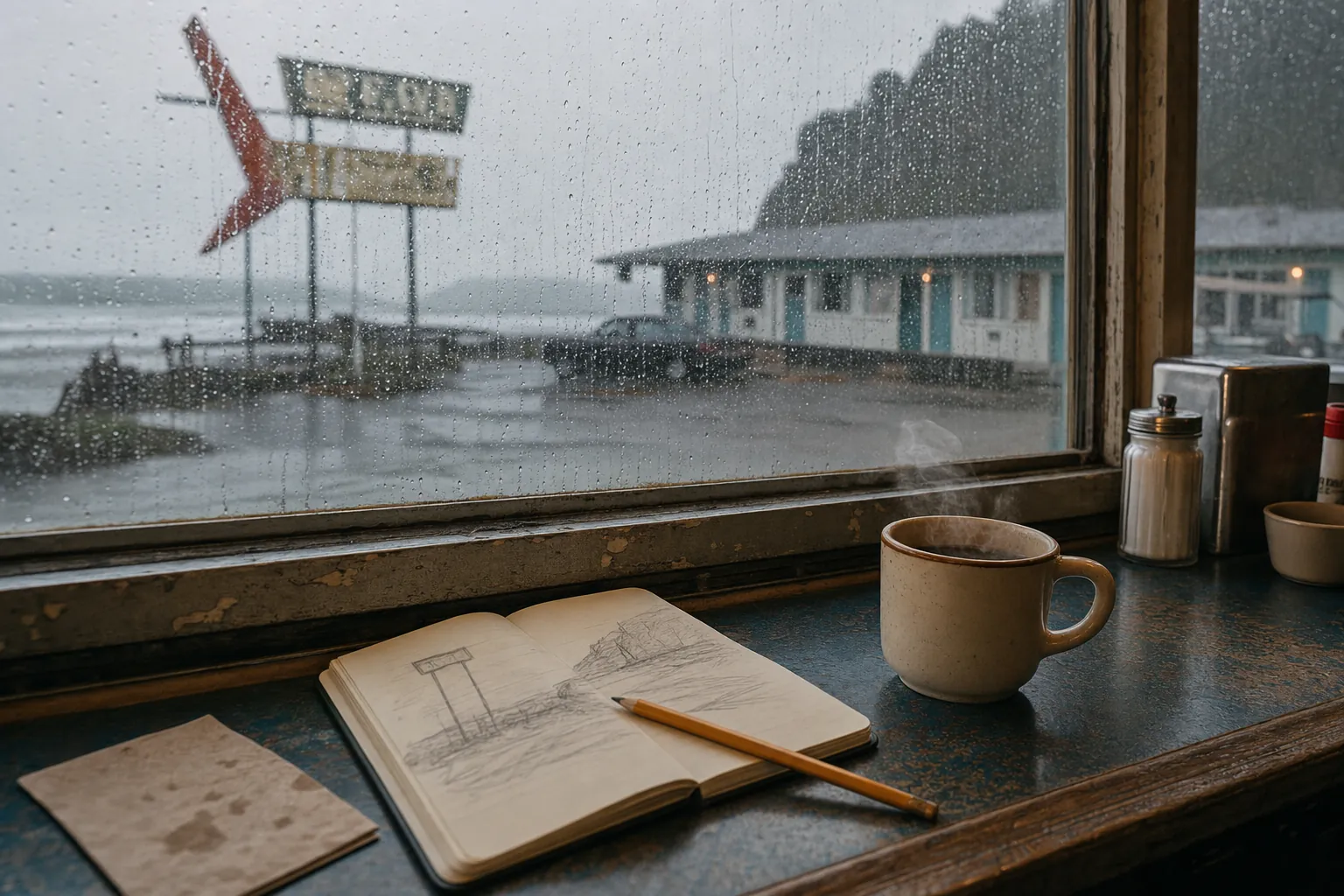
It is not the same as a travel guide
A travel guide answers practical questions: Where should I stay? What should I see? Which route is easiest? That information has value, but it is not the engine of travel writing. A travel writer may mention a bridge, a restaurant, a ferry schedule, or a local custom, yet those details belong because they change the story or make the scene honest.
Think of the difference this way. A guide might tell a visitor that a beach is popular at sunset. Travel writing shows the wind catching sand in a stranger's hair, a couple arguing over a cooler, a child digging for glass, and the writer realizing that the beautiful evening they expected is not the evening they got.
Both approaches can be useful. The guide helps a traveler decide. The story helps a reader feel. Strong travel writing often borrows enough accurate context to orient a reader, then returns to the people, objects, and moments that make a place more than a pin on a map.
The Journal's guide to writing a travel article takes that idea into a practical structure. This is the starting point: before worrying about the whole trip, notice the part that has a little pressure in it.
A journey needs a reason to matter
Movement alone does not make a narrative. A reader can only absorb so many miles, meals, museums, and sunsets before a trip report starts to feel like a luggage receipt. Travel writing comes alive when something is at stake, even if the stake is small.
Maybe the old camper is making a noise nobody wants to name. Maybe a return to a childhood beach reveals how much time has passed. Maybe the plan was to cross the country, but the money, weather, or nerves say otherwise. The outward journey gives the piece momentum. The inner shift gives it shape.
In Rude Awakening Road Trip (Part 1), the dream of an epic road trip collides with the stubborn math of fuel, distance, and an old VW. The road matters because it forces choices. A travel story does not need a disaster, but it does need a question that pulls the reader forward: What happens next? What will this place reveal? What will the traveler have to admit?

Scenes do more work than summaries
Summary has a place in travel writing. It gets a reader across the ordinary miles: “We drove north all afternoon.” Scene is where the piece slows down for a moment that matters: “At the last gas station before the bridge, the clerk tapped our paper map with a wet thumb and told us the road was closed.”
A useful scene needs a location, somebody doing something, a few details the senses can carry, and a change by the end. Give the reader the dashboard, the bench, the motel hallway, the ferry deck, the cracked plastic key tag. Let someone wait, lie, drive, decide, remember, or listen. Then let the weather shift, the plan fail, or the writer understand a little more.
Specific details keep the prose from turning into travel-brochure language. “Beautiful,” “hidden gem,” and “unforgettable” ask the reader to feel something without showing why. Instead, name the object or exchange that earned the feeling. The University of North Carolina Writing Center's guidance on flow is helpful here: a reader follows more easily when the sequence of scenes and reflection has a clear pattern.
For a closer look at details that make a scene vivid, read Travel Writing Examples: Make a Place Come Alive. The trick is not to collect every detail. It is to choose the few that let a reader stand in the moment with you.
Travel writing needs the world beyond the writer
Personal experience gives travel writing energy, but it should not turn everyone else into background scenery. A place has its own people, history, and rhythms. Listen carefully. Check names and facts. Attribute conversations. Be modest about what a weekend can teach you about a community.
Research can make a piece more truthful, especially when a detail about a storm, neighborhood, local tradition, or historic place changes how a reader understands the scene. Use the fact where it belongs. A paragraph of dates rarely helps at the top of a story, but the right fact can give a bridge, building, or local voice more weight at exactly the right moment.
This balance is part of the form's appeal. A travel writer is both participant and witness. The work asks for curiosity, not conquest. When the writer does not know something, the honest move is to look closer, ask better questions, or leave room for uncertainty instead of pretending to be an authority.
Good notes protect the details that memory drops
Travel writing does not require an expensive notebook or a dramatic destination. It does require a way to hold on to what disappears first. A phone note, a receipt with one sentence on the back, a quick voice memo, or five rough lines before bed can save an entire scene later.
- Write one exact image. Replace “nice harbor” with the lobster trap, faded rope, or yellow glove caught in it.
- Write one sound or smell. A ferry horn, bait warming in the sun, rain on a vinyl roof, or coffee in a diner booth can bring a place back fast.
- Write one line of dialogue. The odd phrase someone said is often more useful than a neat summary of the conversation.
- Write what changed. Did the road close, did the weather turn, did a person surprise you, did the plan become something else?
- Write the question you are carrying. That question may become the real subject of the piece.
The notes do not need to be polished. They are raw material. Later, they help you write from remembered texture rather than a vague claim that the trip was fun, strange, or meaningful. The Journal's travel narrative guide shows how to shape those notes into a story with a beginning, turn, and finish.
Choose the story that only you can tell
When a trip has produced too much material, do not ask which event was biggest. Ask which moment changed the way you saw the place, the people around you, or yourself. That is usually the story with the most life in it.
A famous landmark may belong in the piece, but it is rarely enough on its own. Plenty of people have photographed the same view. What the reader cannot get from a brochure is your particular encounter with it: the reason you arrived late, the person beside you, the small embarrassment, the old memory the place stirred, or the ordinary object that suddenly carried more weight than it should have.
Try describing the trip in one honest sentence before you draft: “I thought I was going to write about the coast, but I was really writing about learning to slow down.” “I thought the old van was the story, but the story was the friendship it tested.” “I thought I was returning home, but I was meeting the place after a long absence.” That sentence is not necessarily for the finished piece. It is a compass that helps you decide which scenes stay and which ones are only souvenirs.
G.J.'s May 11 - Kaspar's Coming Out! is a useful reminder that a vehicle can be more than transportation. When the camper carries work, anticipation, character, and a first public outing, it gives the writer a way to tell a larger story without explaining everything directly.
Revision turns a trip into a piece of writing
The first draft is allowed to contain too much: maps, receipts, names, wrong turns, weather, and every stop you fear you will forget. Revision asks a harder question. Which details create place, reveal character, or move the story? Keep those. Let the rest go.
Read once for structure. Does the opening give the reader something to wonder about? Do the middle scenes complicate that question? Does the ending arrive somewhere different, even if the traveler simply returns home with a better question than the one they left with?
Read again for language. Cut the sentence that explains an emotion after the scene has already shown it. Replace the general label with the object that earned it. Read the work aloud. Your ear will catch the spot where the paragraph repeats itself, the sentence that sags, and the ending that keeps talking after it has landed.

Start with the road you already know
You do not need an exotic destination to write travel writing. Start with the ferry you have taken a hundred times, the diner just outside town, the beach after a storm, the drive that feels different now, or the old neighborhood you see with adult eyes.
Blue Sea Glass is built from that kind of attention: Long Island memories, Key West stories, sea glass, a vintage camper, and the odd lesson collected on the scenic route. Browse the writing archive for more of G.J.'s original work, or visit the books for longer journeys. The next piece can begin with a place you already know, as long as you look long enough to notice what the route has been trying to tell you.
Frequently asked questions
Travel writing questions
What is travel writing?
Travel writing uses a journey, a place, and a writer's point of view to create a piece of nonfiction that lets a reader experience more than an itinerary. It can be an essay, memoir, article, or short narrative, but it needs specific observation and a reason the journey matters.
What are the key characteristics of travel writing?
Travel writing combines a real place, a personal point of view, specific sensory detail, and movement or change. It may be brief or book-length, but it gives the reader an experience of the journey rather than simply a list of recommendations.
What is the purpose of travel writing?
The purpose of travel writing is to help a reader experience a place more fully through the writer's attention, voice, and reflection. It can inform, entertain, preserve a memory, or reveal how a journey changed the person taking it.
How is travel writing different from a travel guide?
A travel guide helps a reader decide where to go, what to book, and how to get around. Travel writing can include useful context, but its main purpose is to bring a place to life through scene, voice, people, memory, and change.
Do you need to travel far to write travel writing?
No. A familiar ferry, a roadside diner, the beach after a storm, or a neighborhood seen differently after years away can all become travel writing. Distance matters less than attention, movement, and the question the place raises for the writer.
Does travel writing have to be true?
Travel writing is usually nonfiction, so the people, places, and events should be represented honestly. Writers may shape scenes, select details, and reflect on memory, but they should not invent experiences or present guesswork as fact.
Keep wandering
Related posts
 Travel Writing
Travel Writing Examples: 5 Short Scenes That Bring a Place Alive
Five short travel writing examples with practical notes on adding vivid detail, tension, voice, and a shape that keeps readers moving.
 Travel Writing
How to Write a Travel Narrative: A Step-by-Step Guide
Learn how to write a travel narrative with a clear scene, a turning point, and an ending that shows what changed.
 Travel Writing
How to Write a Travel Article That Takes Readers Along
A scene-first method for turning a real trip into a travel article with a strong angle, useful notes, and a satisfying finish.