
Travel Writing
Travel Writing Examples: 5 Short Scenes That Bring a Place Alive
Five short travel writing examples with practical notes on adding vivid detail, tension, voice, and a shape that keeps readers moving.
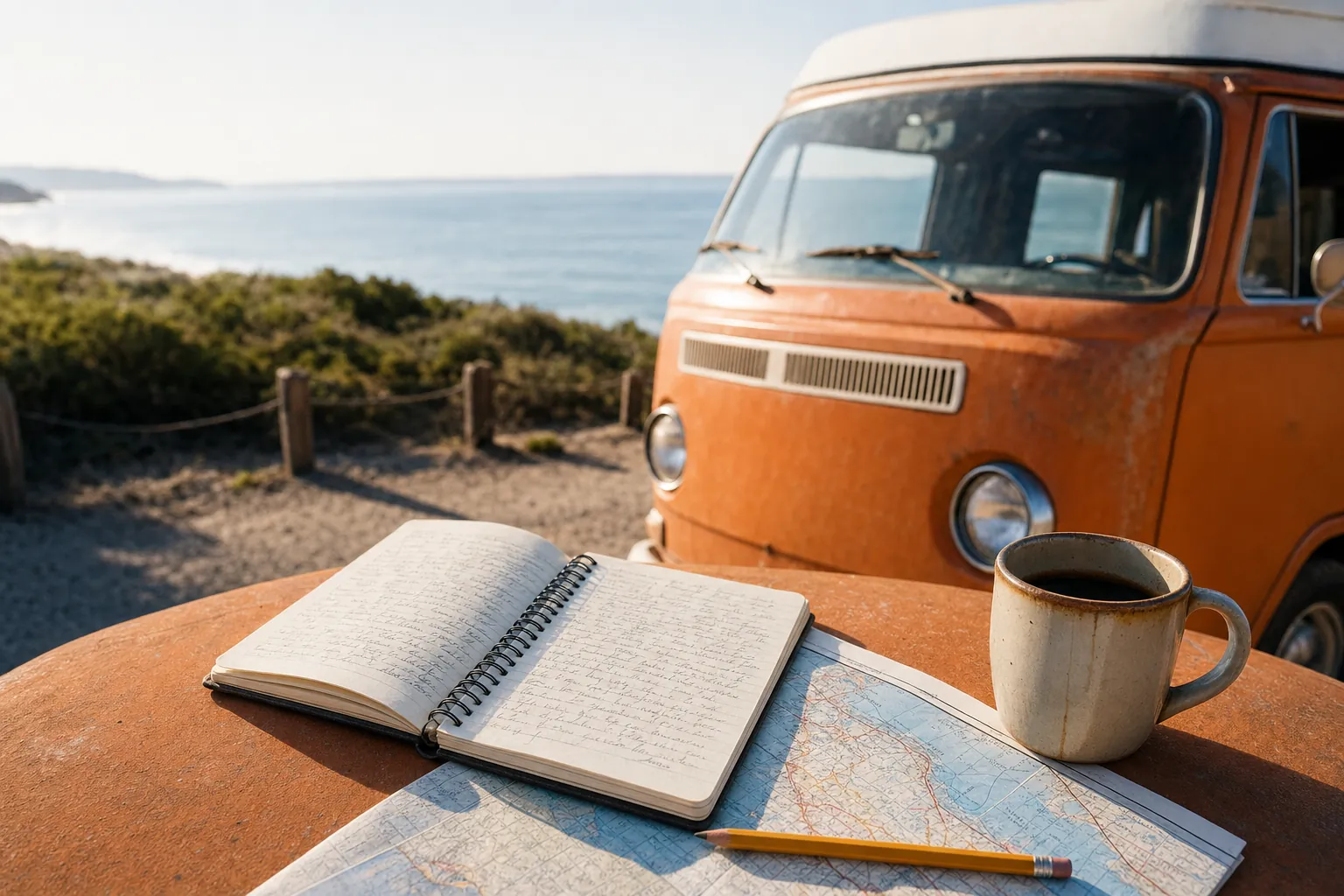
Good travel writing does not begin with the word “beautiful.” It begins with the thing that made a place impossible to ignore: a motel key that sticks in the lock, salt drying on the dashboard, a stranger’s impossible advice, or the first moment you realize your grand plan has run out of gas.
That is the trick. A reader does not need a catalogue of every stop on the map. They need a scene they can stand inside. The scene gives them the weather, the stakes, the people, and the particular angle from which you saw it. From there, a journey becomes more than movement from one town to another. It becomes a story.
What travel writing is really trying to do
Travel writing is a record of movement through a place, but the strongest pieces also record movement within the traveler. A road, ferry, trail, or flight gives the story motion. The writer’s attention gives it meaning. That is why a three-block walk can make a better piece than a twelve-state itinerary.
Writers and editors tend to return to the same useful principles: bring a real point of view, keep careful notes, and make room for the world beyond your own reactions. Writer’s Digest’s travel-writing guidance calls for personal experience alongside local context, while Colorado State University’s Center for Literary Publishing describes the travel essay as an outward journey that can prompt an inward one. Both ideas matter because scenery alone does not create a narrative.
Think of the destination as pressure, not wallpaper. It puts the traveler in motion and asks something of them. Perhaps the road exposes bad planning. Perhaps a familiar shoreline exposes a memory. Perhaps a place you expected to dismiss surprises you with kindness. The reader stays because they want to see what happens next.
Example 1: Start with one physical detail
Flat version: “The coastal fruit stand was charming and the weather was hot.”
Travel-writing version: “By noon, the oranges on the roadside stand had gone soft at the edges, and the striped awning snapped hard enough in the wind to make the owner’s radio stutter between songs.”
The second version does not merely label the place. It makes a claim with objects, sound, and motion. The fruit is not just fruit; it has been sitting in the heat. The awning tells us about the wind. The radio gives the scene a human presence even before anyone speaks.

When you take notes, skip broad labels such as “busy,” “interesting,” or “authentic.” Write down what made you choose those words. Was the street busy because scooters kept clipping the curb? Was it interesting because a woman in a pharmacy knew everyone by name? Precision lets the reader do the feeling for themselves.
Example 2: Let the destination create a problem
Flat version: “We stayed at a motel near the beach because it started to rain.”
Travel-writing version: “The rain began just as the motel clerk slid the key across the counter. Its plastic tag read 12, though the room was the last thing we had planned for: two wet jackets, a sputtering van, and enough cash left for a questionable dinner from the vending machine.”
Now there is a question. Will the van start? Is the motel refuge or evidence of a trip going sideways? The destination has become active. It changes the plan and forces the people in the story to reveal themselves.
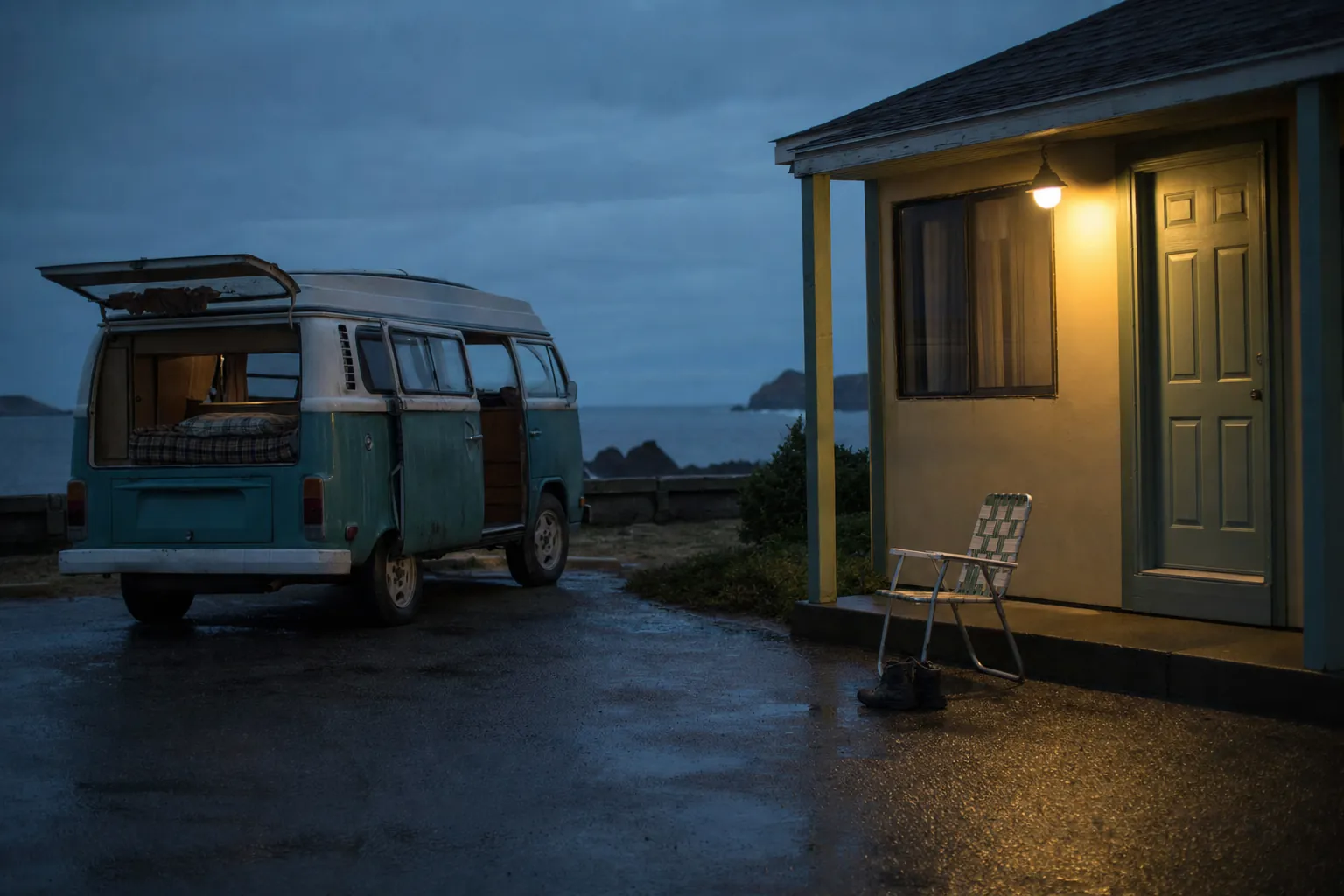
This is especially useful when writing about a trip that did not go as planned. The mishap often contains the real story. In G.J.’s Rude Awakening Road Trip (Part 1), the dream of a grand VW journey runs straight into money, mileage, and the stubborn math of a long road. The turn from fantasy to survival gives the road its shape.
Example 3: Make room for the person telling it
A travel story is not a tourist brochure. The reader needs to know what kind of traveler is noticing the world. That does not mean the writer must announce every feeling. A few choices can do the work: the snack bought at the gas station, the song played too many times, the memory that gets stirred up by a smell, or the absurd rule the traveler tries to avoid.
Flat version: “I liked the town because it was different from home.”
Travel-writing version: “In that town, nobody seemed in a hurry except me. I had spent so long measuring a day by meetings and clocks that a man taking ten minutes to choose a tomato struck me as an act of rebellion.”
The place is still present, but the narrator is visible too. Their impatience is part of the scene. The moment works because it reveals a small collision between the traveler’s habits and the rhythm of the town.
G.J.’s Key West - In Loving Memory works in this mode. The place matters, but so does the earned intimacy of someone looking back at a life lived there. That is the difference between information and recollection.
Example 4: Use facts as seasoning, not a lecture
Research can make a travel piece more trustworthy and more interesting. It is also where many drafts turn stiff. Do the homework before you write, then bring in only the detail that changes how the reader sees the scene.
Instead of opening with a paragraph of dates and population numbers, attach the useful fact to a moment. If a bridge was built after a storm, mention it when you cross it. If a neighborhood changed after a fire, let a local voice or a surviving sign lead you into that history. A fact belongs in the story when it gives the present moment more weight.
When a place is not yours, the responsibility rises. Avoid pretending that a weekend makes you an authority. Listen closely, check what you think you know, and be careful about who gets reduced to background scenery. Local voices, a properly attributed conversation, and modest claims will always read better than borrowed certainty.
Example 5: Build the piece around a small scene
Many first drafts try to cover the whole trip in order: Day One, then Day Two, then lunch, then the museum, then the sunset. Chronology is not structure. A better approach is to choose one scene that contains the energy of the journey and let the rest of the trip circle around it.
That scene may be a breakdown on the highway, an argument in a parking lot, a quiet dawn on a dock, or the moment a destination proves different from the version you had carried in your head. Start there. Then step back when you need context. Return to it near the end, changed by what the journey has taught you.
For an example of how a vehicle can become more than transportation, read May 11 - Kaspar’s Coming Out!. The camper is part machine, part character, and part invitation to a different kind of life. That is often where a travel story finds its spine: in the thing that keeps showing up with more meaning each time.
A simple field-notes method
Travel writers do not need to spend the whole trip staring into a notebook. A short, specific note is more useful than a heroic attempt to capture every second. Try this at each stop:
- Write one thing you can see. Make it concrete enough that a stranger could picture it.
- Write one thing you can hear or smell. Sound and scent often bring back a place faster than a photograph.
- Write one line of dialogue. Record the exact words if you can; the odd phrase is usually better than a tidy summary.
- Write what changed. Did the weather turn, did the plan fail, did you learn something, did a person surprise you?
- Write the question you are still carrying. That question may become the piece’s real subject.
These notes help you write from lived texture instead of vague memory. They also make room for the moments that do not photograph well: a worn seatbelt, a crooked menu, a smell of wet towels in a beach motel, the awkward silence after a missed turn.
How to turn field notes into a first draft
When you get home, do not begin by arranging everything in the order it happened. Spread the notes out and look for a pattern. Which moment still has heat in it? Which person, object, or mistake keeps reappearing? The answer is usually the center of the draft.
Give yourself a small assignment: write the strongest scene first, in no more than five hundred words. Stay in the moment. Let the reader hear the engine, feel the damp air, or wait with you while someone decides whether to turn left. Do not pause to explain the whole trip. Context can come later, once the reader has a reason to care.
After that scene, write a paragraph about what it changed. Maybe you understood why you had come. Maybe you discovered the trip was not going to become the story you had planned to tell. Maybe a place you had dismissed became the one you remembered. That change gives the piece direction.
For a useful reminder to gather research, sensory detail, and quick reflections while the journey is still fresh, see this student guide to travel writing. The advice is simple because it works: notice more than you can use, then choose the few details that carry the most weight.
Revision is where the trip becomes a story
The first draft is allowed to be a pile of maps, receipts, names, and weather. The revision asks what belongs. Keep the details that create place, reveal character, or move the story forward. Cut the ones that only prove you were busy.

Read the draft aloud and listen for travel-brochure language. “Breathtaking,” “hidden gem,” “paradise,” and “unforgettable” usually ask the reader to feel something without showing why. Replace them with the object, exchange, mistake, or memory that earned the feeling.
Then check the ending. A travel story does not have to wrap every thought in a bow. It does need to leave the reader somewhere different from where it started. The road may lead home, farther away, or simply to a clearer question. Let the final image carry that change.
Start with the trip you already have
You do not need a passport stamp or a perfect itinerary to practice travel writing. Start with the route you take without thinking. Write about the diner at the edge of town, the ferry you avoid in bad weather, the beach you knew as a child, or the night the car made a sound it had no business making.
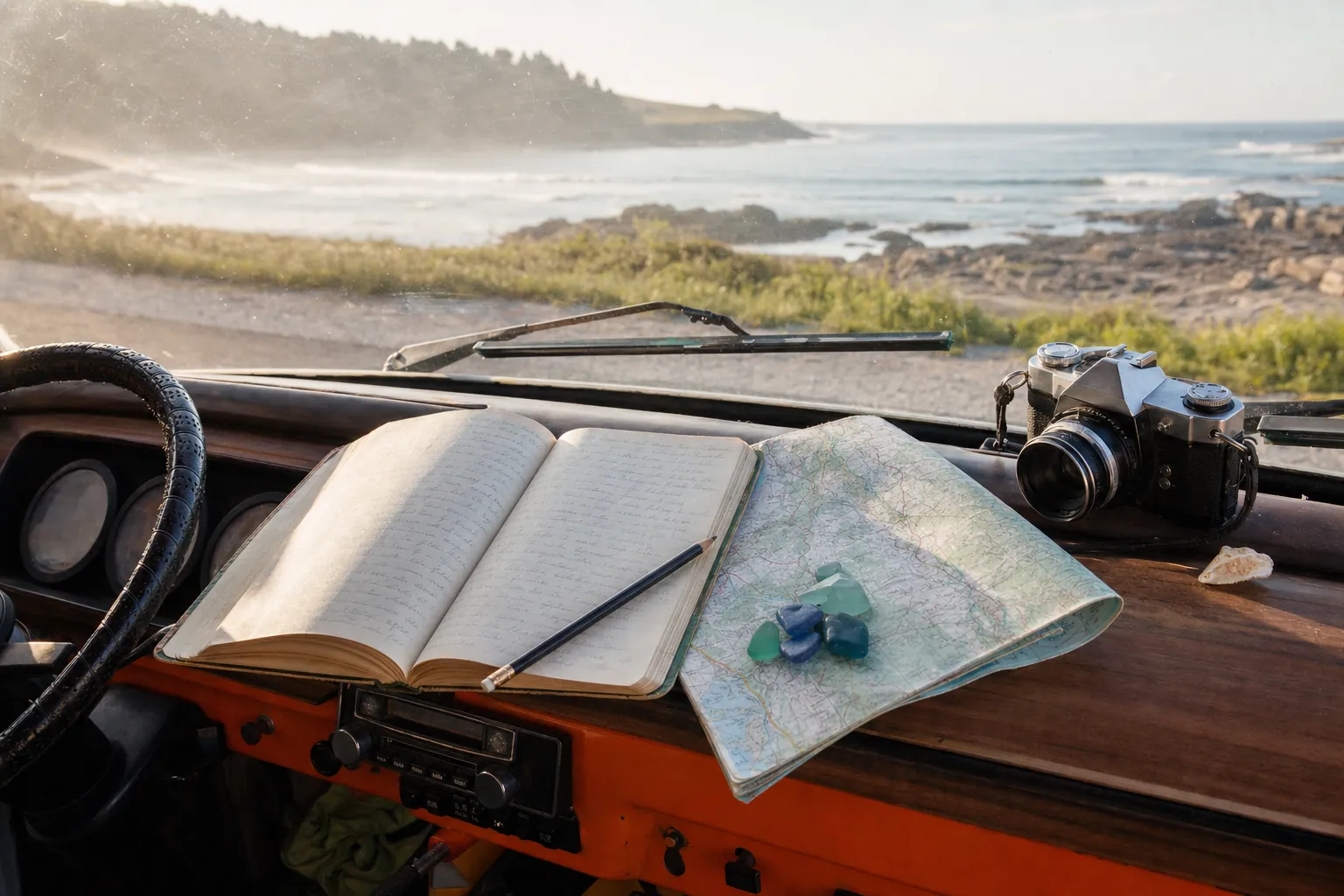
Blue Sea Glass is built from that kind of attention: Long Island memories, Key West mischief, a vintage camper, and the stories that collect when you take the scenic route. The writing archive is a good place to wander for more of those moments. The point is not to make every mile sound important. The point is to notice the miles that were.
Frequently asked questions
Travel writing questions
What makes travel writing different from a guidebook?
A guidebook helps a reader plan. Travel writing lets the reader experience a place through a particular set of eyes. It can include useful context, but its engine is scene, voice, memory, surprise, and the change that happens along the way.
Do I need an exotic destination to write travel stories?
No. A ferry ride, a hometown beach, a night in a roadside motel, or a drive you have made a dozen times can hold a travel story. The useful question is not how far you went. It is what you noticed, what changed, and why the moment stayed with you.
How much research should travel writing include?
Enough to keep the reader oriented and to avoid getting a place wrong. Research works best when it supports the story instead of replacing it. Start with firsthand observation, then add history, local context, or a reliable voice where it sharpens the meaning of the scene.
Can travel writing be funny?
It should be funny when the trip was funny. Missed turns, overconfident plans, cheap motels, broken gear, and human awkwardness often make a journey memorable. Let the humor reveal character or consequence rather than turning the people around you into props.
Keep wandering
Related posts
 Travel Writing
How to Write a Travel Narrative: A Step-by-Step Guide
Learn how to write a travel narrative with a clear scene, a turning point, and an ending that shows what changed.
 Travel Writing
How to Write a Travel Article That Takes Readers Along
A scene-first method for turning a real trip into a travel article with a strong angle, useful notes, and a satisfying finish.
 Travel Writing
What Is Travel Writing? A Guide to Seeing the Road
An introduction to travel writing: what it is, what it does, how it differs from a guidebook, and the details that make a place stay with a reader.