
Travel Writing
Travel Writing Tips: 10 Ways to Make a Place Stay
Ten practical travel writing tips for finding scenes, taking better notes, and shaping a trip into a story readers can feel.

The best travel writing does not begin with the biggest attraction on the map. It begins with the thing that will not leave you alone: a coffee cup sliding on a diner counter, a weathered motel key, a bridge that is closed when it should not be, or the first clear sign that the plan has gone sideways.
That is good news for anyone who wants to write. You do not need a passport stamp, a luxury itinerary, or a dramatic mishap. You need attention. A familiar road, a rainy beach, a missed turn, or an afternoon in a town you thought you understood can hold more life than a dozen rushed landmarks. These travel writing tips will help you notice the moments worth keeping, then give them a shape a reader can follow.
1. Start with the moment that has pressure
Do not open with the whole trip. Start with the moment where something is about to happen, or where the ordinary surface of the day starts to crack. A travel story needs movement, and movement comes from a question. Will the van start? Does the ferry leave before you get there? Why does a familiar place suddenly feel strange?
Write three moments from the trip that still have a charge. Put each one in a single present-tense sentence without explaining it. “The rain begins before we find the motel.” “The old man at the gas station folds our map the wrong way.” “My brother goes quiet when the road turns toward home.” The sentence that makes you want to know what comes next is probably where the piece begins.
G.J.'s Rude Awakening Road Trip (Part 1) has this kind of pressure. The dream of the open road meets the stubborn math of money, miles, and an old VW. The road becomes more than scenery because it keeps asking something of the people on it.
2. Trade broad labels for proof
Words such as “beautiful,” “authentic,” “amazing,” and “unforgettable” do not show a reader anything. They ask the reader to accept a feeling you have not earned yet. Replace the label with the object, sound, smell, or exchange that made you feel it.
Instead of writing that a beach was beautiful, describe the tide leaving green glass in the sand beside a crab trap. Instead of calling a town sleepy, let a man take ten minutes to choose tomatoes while you watch the parking meter run out. The particular detail is not decoration. It proves that you were there, and it gives the reader enough evidence to feel the place for themselves.

This is why the existing Travel Writing Examples guide starts with sensory detail. Specificity turns a location into a lived setting. The trick here is to choose only the details that carry some meaning, not every object in sight.
3. Take notes that are small enough to keep doing
Travel notes are not a second job. If you try to document every hour, you will stop looking up. A five-line habit works better than a perfect notebook you abandon on day two. At each stop, write one image, one sound or smell, one line of dialogue, one change in the plan, and one question you are still carrying.
A phone note, a receipt with a sentence on the back, or a quick voice memo can do the work. What matters is catching the raw material before your mind smooths it into a vague summary. The salt smell in a stairwell, the plastic key tag marked 12, the exact phrase a waitress uses to describe the weather. Those are the things a first draft can grow around.
Colorado State University's Center for Literary Publishing makes a similar case for looking closely and recording the emotional as well as physical experience of a place. Notes should help you remember what was happening around you and within you, not only where you ate lunch.
4. Let the destination create a complication
A location becomes part of a story when it pushes back. Weather changes the plan. A road closure exposes impatience. An unfamiliar neighborhood forces a writer to slow down and listen. Even a quiet trip has friction: the gap between what you expected and what the place gives you.
When you look back over your notes, find the moment where the trip tilted. It may be a missed turn, a mechanical problem, a conversation, or the discovery that a place you had dismissed is the one you remember most clearly. Give that turn a full scene. Let the reader see the setting, the people, and what changes by the end of the moment.

Do not manufacture drama. The useful complication is often small. A room is not ready. The last bus is gone. Someone says no when you expected yes. Small pressure reveals character, and character is what keeps a travel piece from reading like a brochure.
5. Use summary to move and scenes to matter
Summary is not the enemy. It gets the reader across ordinary miles: “We drove through the afternoon and reached the coast at dusk.” Scene slows the story down when something changes: “At the last gas station before the water, the clerk tapped the map with a damp thumb and said the bridge had been closed for hours.”
Use summary for routine movement, background, and context. Use scenes for decisions, surprises, arguments, discoveries, and moments of recognition. If every paragraph is a full scene, the piece stalls. If every paragraph is summary, nothing has weight. The rhythm comes from knowing which moments deserve a close look.
The Journal's guide to travel narratives goes further into that balance. For a quick revision check, circle every paragraph where something changes. If the story has long stretches without a change, either compress them or find the detail that makes the stretch matter.
6. Make room for the person telling the story
A travel writer is not a camera. The reader needs to understand whose eyes are on the road. Your habits, hopes, blind spots, and sense of humor belong in the piece, even when you never stop to announce them. Let the narrator appear through selection: the song played too often, the snack bought at the gas station, the directions you refuse to trust, the place you did not want to like.
That does not mean every paragraph has to begin with “I.” Let the point of view show through the details you choose and the meaning you make of them. G.J.'s Key West - In Loving Memory works because the place is connected to memory, not because it tries to list every reason Key West is worth visiting.
Perspective also asks for humility. A weekend does not make anyone an authority on a community. Check facts, attribute stories that are not yours, and let local people remain people instead of scenery. The more closely you observe, the less you need to pretend you know everything.
7. Research enough to keep the story honest
Research can give a scene depth. A short historical fact, a local custom, or the reason a bridge exists can change how a reader sees the present moment. The key is to use information where it belongs, not dump it all at the front of the piece.
Research before drafting, then bring in only what sharpens a scene or helps you avoid getting the place wrong. Let a fact arrive when the narrator crosses the bridge, hears the local story, or notices what is missing. Writer's Digest's travel-writing guidance emphasizes firsthand experience alongside context, a useful balance for any piece that wants to be personal without becoming careless.
If a local source disagrees with your assumption, use that tension. It may lead to the better story. A travel writer does not have to sound certain about everything. Being precise about what you saw, what you learned, and what you still do not know builds more trust than borrowed authority.
8. Find the object that holds the trip together
Many good travel pieces have a recurring object: a map, a ferry ticket, a motel key, a pair of wet shoes, a broken zipper, a piece of sea glass, or a vehicle with more personality than good sense. The object gives the reader something physical to hold as the story moves.
Do not choose a symbol and force it to behave. Notice what is already returning in your notes. Does the same road sign keep appearing? Does the coffee cup show up whenever the plan collapses? Does the old van become a source of hope, embarrassment, and trouble? Let the object earn meaning through repetition.
That is part of the charm of Prelude to a Groovy Road Trip. Vinnie van Go is not merely transportation. The VW becomes companion, obstacle, and invitation to keep moving. A recurring object can quietly give a travel story its spine.
9. Revise for shape, not for mileage
On the first revision, cut the parts that only prove you went somewhere. A travel piece does not need to report every meal, every hotel, or every turn. Keep the moments that make place, reveal character, raise a question, or change the narrator's understanding.
Then read the draft aloud. Your ear will catch the sentence that says the same thing twice and the paragraph that explains a feeling after the scene has already shown it. Look again for brochure language. “Hidden gem,” “must-see,” and “paradise” usually flatten a place. Trade them for evidence: the rust on the pier, the last table near the window, the smell of wet towels in the motel hall.

Finally, make sure the ending lands somewhere different from the opening. The traveler does not need a grand lesson. They may simply see the same road, person, or object with a little more clarity. That small shift is enough to give the journey meaning.
10. Start with the trip you already have
The next piece does not need to begin on a distant shore. Write the beach you knew as a child, the diner at the edge of town, the ferry you take in bad weather, the street that feels different after years away, or the drive that taught you a plan can become a story.
Blue Sea Glass is built from that kind of attention: Long Island, Key West, roadside surprises, sea glass, poems, and a vintage camper that has had a few opinions of its own. Browse G.J.'s writing archive for original stories, or explore the books for longer journeys. Start with one real moment, write the scene before you explain it, and see where the road takes you.
Frequently asked questions
Travel writing questions
What should I write down while traveling?
Write down the details memory loses first: one exact thing you can see, a sound or smell, a line of dialogue, a small change in the plan, and the question you are still carrying. A few specific notes are more useful than trying to record every stop.
Do I need an exotic trip to write travel writing?
No. A drive out of town, a familiar beach after a storm, a ferry, a roadside diner, or an old neighborhood can become travel writing when you notice what makes that place different and what the journey changes in you.
How do I make travel writing less like an itinerary?
Choose a scene that has pressure, then use summary only to move between important moments. Keep the stops that reveal character, change the plan, or deepen the meaning of the journey. Let ordinary mileage fall away.
Should travel writing include research?
Yes, when research helps a reader understand the place more clearly. Check facts, listen to local voices, and add context where it changes the meaning of a scene. Do not bury the story under information that does not belong there.
Keep wandering
Related posts
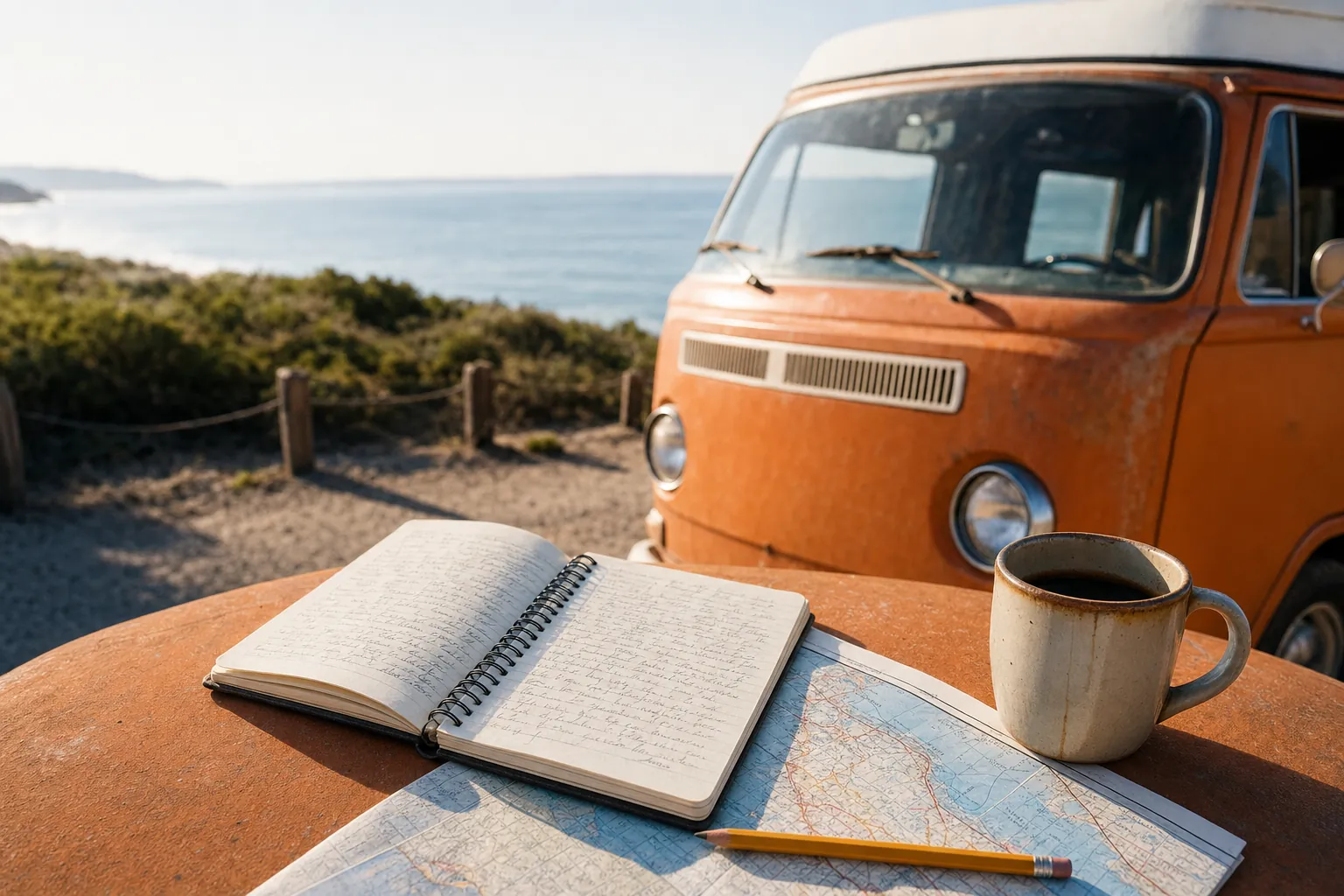 Travel Writing
Travel Writing Examples: 5 Short Scenes That Bring a Place Alive
Five short travel writing examples with practical notes on adding vivid detail, tension, voice, and a shape that keeps readers moving.
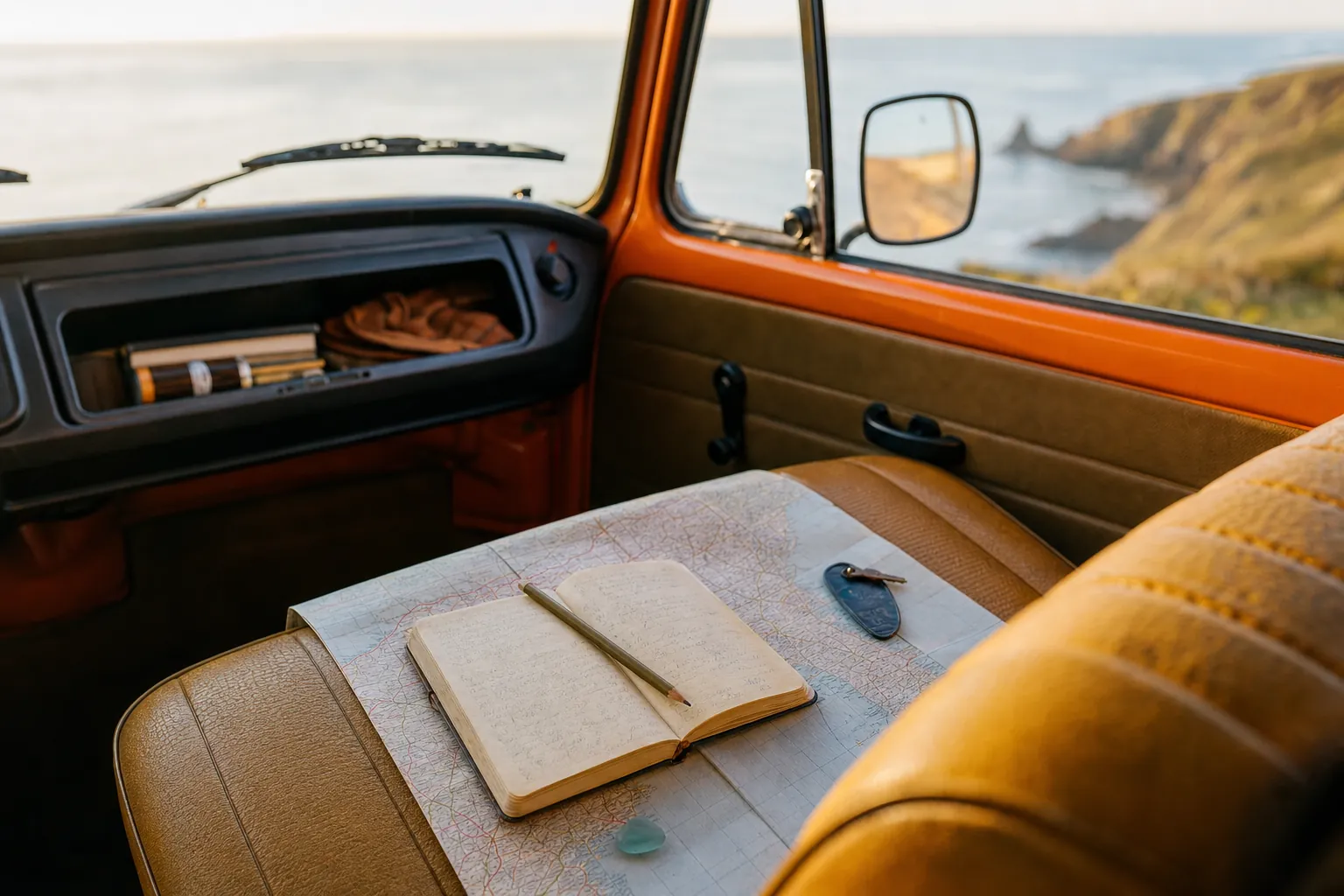 Travel Writing
How to Write a Travel Narrative: A Step-by-Step Guide
Learn how to write a travel narrative with a clear scene, a turning point, and an ending that shows what changed.
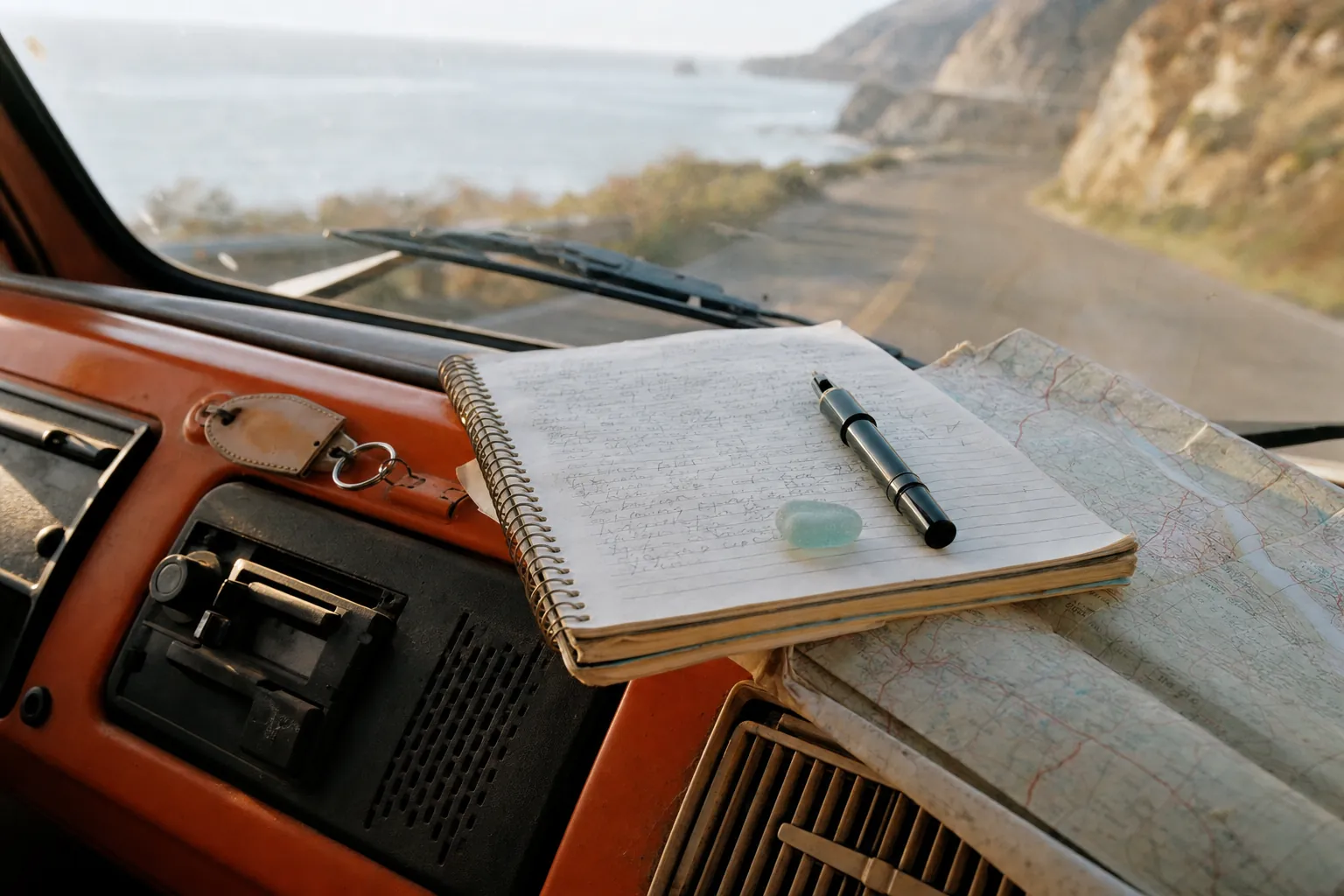 Travel Writing
How to Write a Travel Article That Takes Readers Along
A scene-first method for turning a real trip into a travel article with a strong angle, useful notes, and a satisfying finish.