
Travel Writing
How to Start Travel Writing: Begin With One Real Journey
A practical way to start travel writing with close observation, one live scene, and a journey you already know.
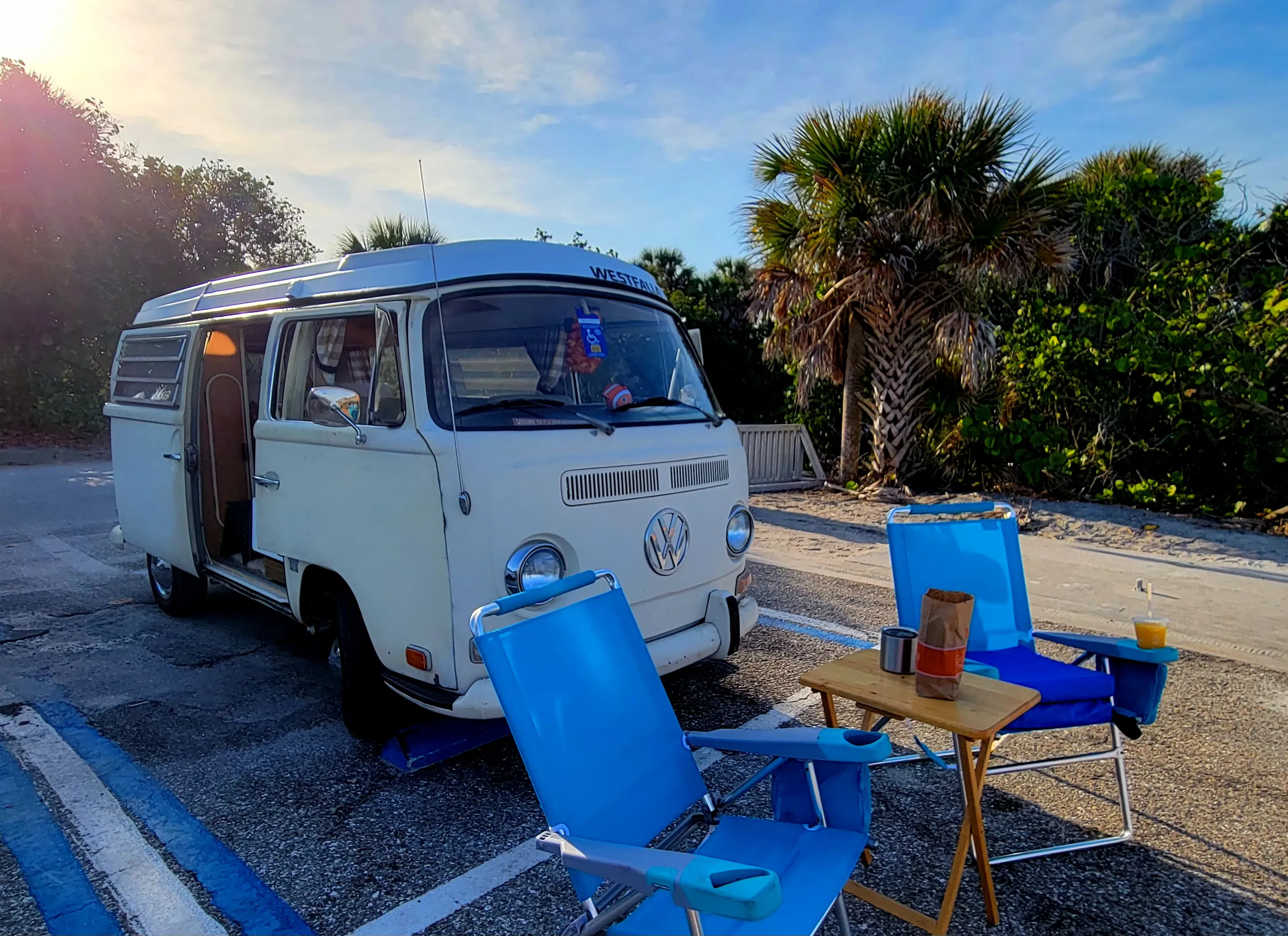
Travel writing starts before the landmark, before the polished itinerary, and usually before you know what the story is. It starts when something small pulls your attention away from the plan: a ferry horn in fog, a piece of blue glass in the sand, a diner server who knows the weather better than the map, or a car that develops a personality halfway through the trip.
That is good news for a new writer. You do not need an exotic destination, a travel-blog following, or a perfect week away. You need one real journey, a way to notice it, and enough patience to stay with the detail that keeps returning. The trip can be a long drive, a walk through an old neighborhood, a beach you know by heart, or the route you take when you need to think.
Starting small is not settling. It gives you a chance to learn the useful parts of the work: how to collect material without drowning in it, how to turn a memory into a scene, and how to leave a reader with more than a list of stops. Here is a practical way to begin.
1. Choose a journey that already has a little pressure
The first mistake is waiting for a grand enough trip. A travel piece does not become interesting because it crosses an ocean. It becomes interesting because the traveler wants something, expects something, or discovers that the route will not cooperate.
Look for a journey with a small question inside it. Maybe you went back to the beach where you spent your childhood. Maybe you took a road trip with somebody who had a very different idea of a good day. Maybe the weather changed the plan, the car made a troubling sound, or a familiar town no longer felt familiar. You are not hunting for disaster. You are looking for the moment where expectation meets reality.
Write down three possible trips, then finish this sentence for each one: "This journey became a story when..." Do not worry about style. The answer might be, "when the bridge closed," "when my friend went quiet," or "when I found the object I had lost years ago." Choose the answer that gives you another question. That is the journey to start with.
G.J.'s Rude Awakening Road Trip has exactly that kind of pressure. The dream of the open road runs into money, distance, and a vintage VW that refuses to be background scenery. The miles matter because the people and the vehicle keep changing what the trip asks of them.
2. Take field notes before memory smooths everything over
When you are traveling, memory feels reliable. A few days later it has turned every diner into the same diner and every beach into a pleasant blur. Field notes protect the particulars. They do not need to be elegant, and they do not need to be complete. Their job is to catch what your future self will not be able to invent honestly.
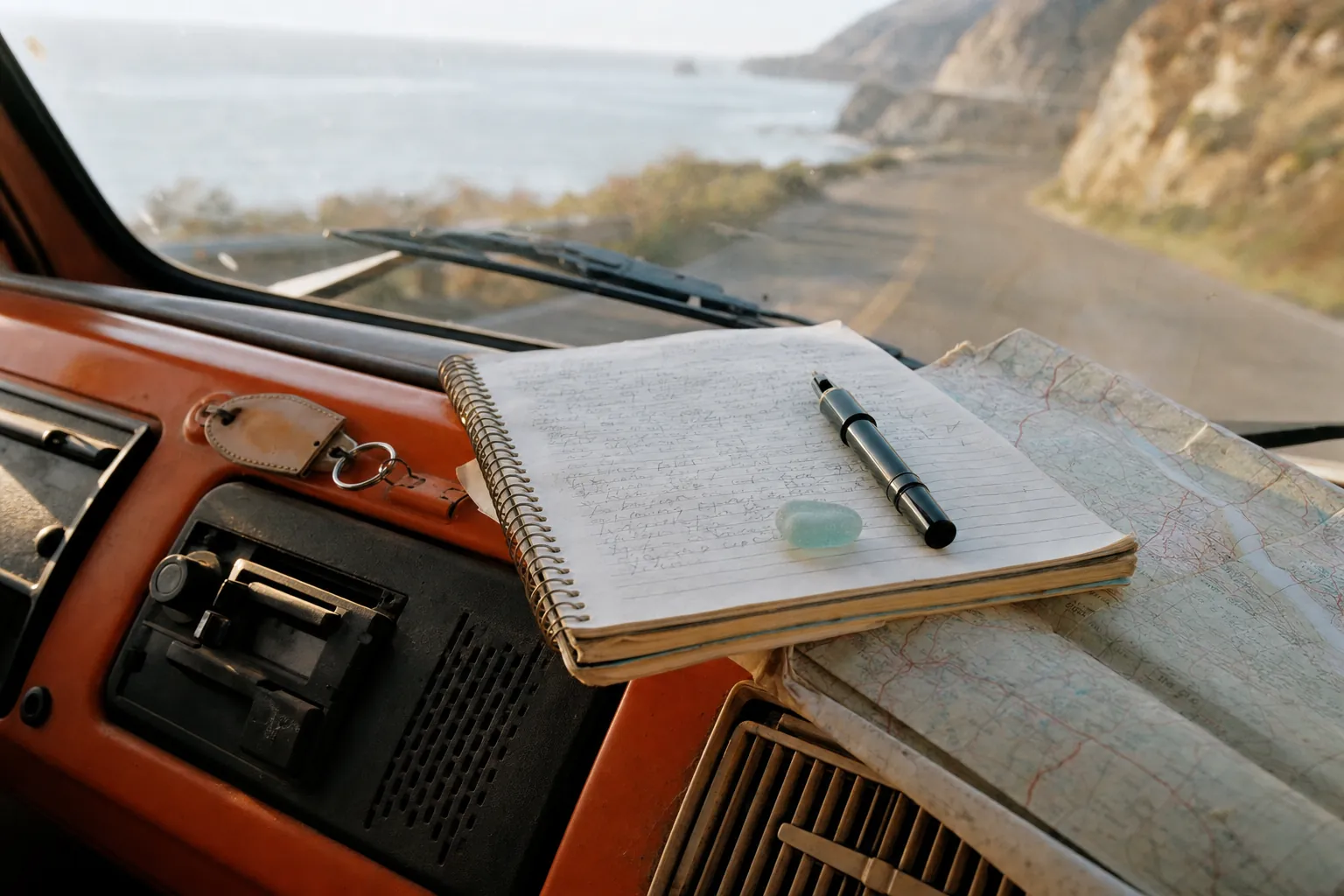
Keep a notebook, use the notes app on your phone, or record a quick voice memo when you stop. Make a short list at the end of the day. Include one thing you saw, one sound or smell, one exact phrase somebody said, one object you touched, and one thing that did not go according to plan. A motel key, damp map, dead phone battery, strange sandwich, roadside sign, or scrape of sand in a shoe can later become the hinge of a scene.

Do not try to record every fact. A travel diary can preserve the schedule, but a travel story needs the evidence that makes a place feel particular. The Purdue travel-writing workshop makes the same distinction: select representative moments instead of trying to carry the entire trip onto the page.
Notice people with care. A stranger is not a colorful prop placed there to make your story feel worldly. Record what they actually do, the words they use, and the part they play in the moment. If you use dialogue later, give it enough setting that the reader understands who is speaking and why it changes the scene. The University of North Carolina Writing Center's guidance on quotations is useful here: context lets a reader understand what words really mean.
3. Find one detail that can carry the place
Travel writing becomes vague when it leans on words such as beautiful, unforgettable, charming, or breathtaking. Those words ask the reader to feel something without giving them anything to hold. A specific detail does the harder and better work.
Instead of saying the beach was beautiful, show the blue glass in your palm, worn soft by years in the water. Instead of saying the motel was strange, show the key tag, the ice machine outside the door, the damp smell in the carpet, or the clerk who looked at your map and laughed. Instead of saying the drive was long, show the coffee gone cold in the cup holder and the same radio station fading in and out for an hour.

A good detail can return later with more weight. At the beginning, the folded map may stand for control. By the end, it may be useless, soaked, or folded along a road you never intended to take. The reader recognizes it, and the changed meaning gives the piece shape without requiring a big speech about what was learned.
This is one reason a close look at ordinary things matters in G.J.'s Blue Sea Glass and Other Rare Finds. A small beach find can open into memory, companionship, time, and the places a person cannot quite leave behind. The object is not important because it is rare. It matters because the writer notices what it carries.
4. Draft one scene, not the whole vacation
For a first piece, give yourself a smaller assignment than "write about my trip." Choose one live moment and write it as a scene. A scene has a place, people or a person, physical detail, and some movement. Someone wants to get somewhere, waits for news, takes a wrong turn, finds something, changes their mind, or says something that shifts the air.
Start in the middle of that moment. Do not begin with, "Last summer, my family went to..." Begin when the rain starts, when the ferry horn sounds, when the gas gauge drops, or when you bend to pick up the object that changes the walk. Give the reader two or three details to stand on, then add only the background needed to understand why this moment matters.
Try this simple sequence:
- Put the reader somewhere. Name the physical setting through what can be seen, heard, smelled, or touched.
- Introduce a little uncertainty. Let the plan, the weather, a memory, another person, or the road itself put pressure on the moment.
- Let somebody respond. A choice, a silence, an action, or a line of dialogue should move the scene toward a changed understanding.
Write five hundred words before deciding whether the scene is good. Early drafts are supposed to contain too much explanation, too many directions, and details that do not belong. Your first job is to arrive on the page. Revision will show you where the actual story begins.
When you need a model for beginning with a moment rather than a summary, read the Journal's travel writing examples. The strongest examples place the reader in a specific situation before telling them what the writer thinks about it.
5. Revise for what stayed with you
After a day or two away from the draft, read it and circle the lines that still feel alive. Often they are the details that did not fit your original plan: the wrong road, the small joke, the roadside conversation, the object in a pocket, the place you thought you knew. Those are often closer to the real center than the museum, meal, or scenic overlook you assumed would carry the piece.
Then cut the information that only proves you were busy. You do not need to tell a reader every town, every restaurant, and every mile. Keep the material that reveals place, creates a choice, or changes the meaning of the journey. Use a quick summary to move through ordinary distance, then slow down for the moments that earned a scene.
Ask a few plain revision questions: What did I expect before the trip? What disturbed that expectation? What detail keeps returning? What is different by the last paragraph? The answer does not have to be grand. A travel piece can end with a key tag in a drawer, a bit of sand still in a shoe, or the realization that home looks different from the road.
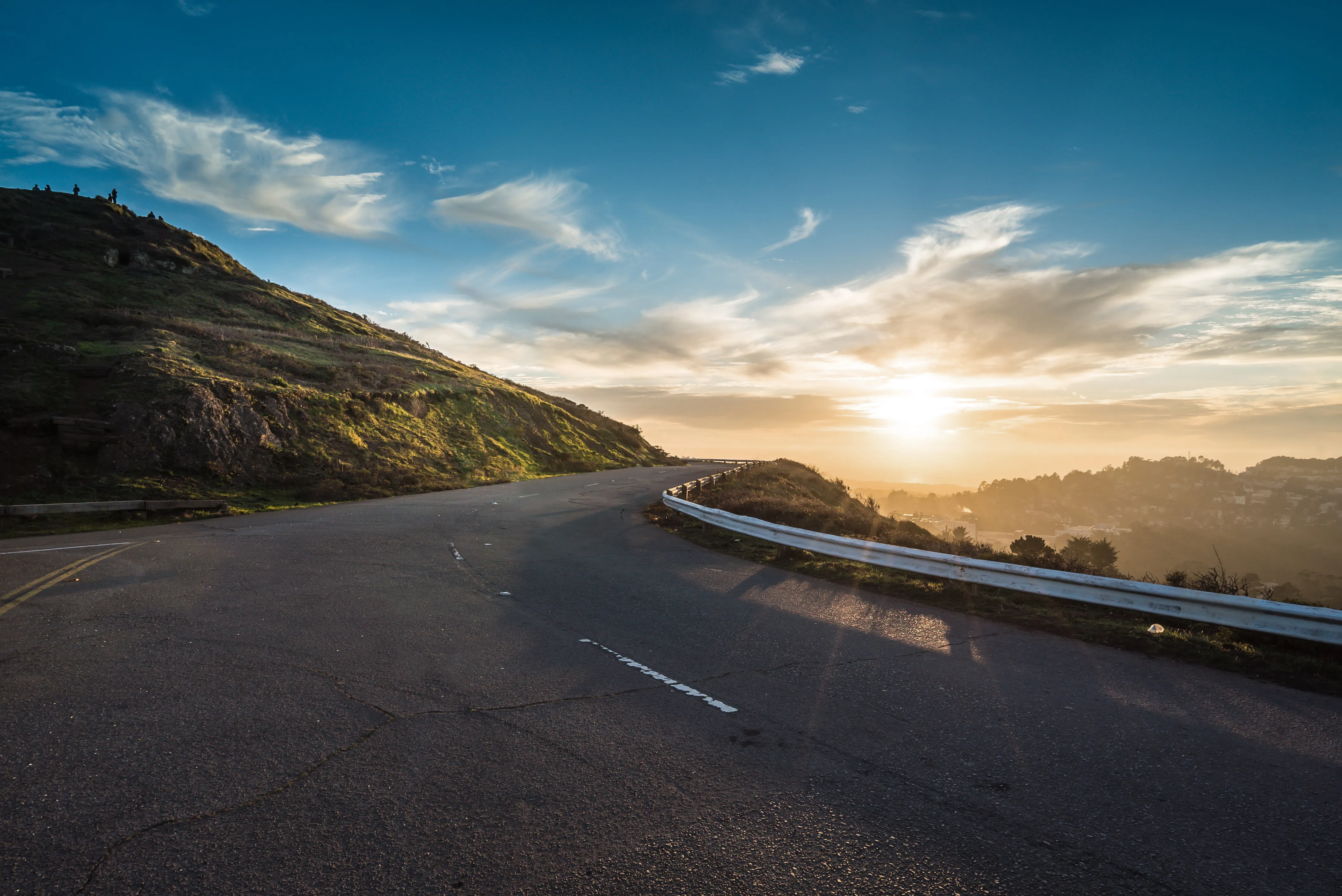
The Journal's travel writing structure guide can help when you have more than one scene and need to arrange them. Its core idea is simple: let the question inside the journey decide what belongs in the beginning, middle, and ending.
Start close to the road you already know
Travel writing does not require you to perform a life other people would envy. It asks you to pay closer attention to the miles you have actually lived. Begin with the beach after a storm, the hometown route you have not driven in years, the awkward roadside stop, the ferry ride, or the car trip that got complicated in a way you did not expect.
G.J.'s writing offers a generous reminder that the scenic route is not only for major adventures. The stories move through Long Island, Key West, old roads, beach finds, and Kaspar, the orange VW that makes its own demands on every plan. Browse the writing archive for the original work, or pick up Prelude to a Groovy Road Trip for a longer ride with the bus at the center. Start with one true moment, make the reader feel where they are, and follow the detail that refuses to leave you alone.
Frequently asked questions
Starting travel writing
Do I need to travel far to begin travel writing?
No. A ferry ride, an afternoon at a familiar beach, a drive to the next town, or a return to a place from childhood can give you enough material. Begin with the journey that makes you notice something, not the one that sounds most impressive.
What should I write down while I am traveling?
Write down what memory will lose first: a precise sight, a sound or smell, a line somebody says, a small problem, and the question the moment leaves behind. A few sharp notes are more useful than a complete record of every stop.
How long should a first travel writing piece be?
Start small. One finished scene of five hundred to eight hundred words is enough to practice choosing detail, building a moment, and finding an ending. A short piece with a clear center teaches more than an unfinished account of a whole vacation.
Is travel writing fiction or nonfiction?
Travel writing is usually nonfiction rooted in a real journey, but it uses the same tools that make stories readable: scene, voice, character, sensory detail, and shape. Keep the essential facts honest, then choose the moments that best reveal what the journey meant.
Keep wandering
Related posts
 Travel Writing
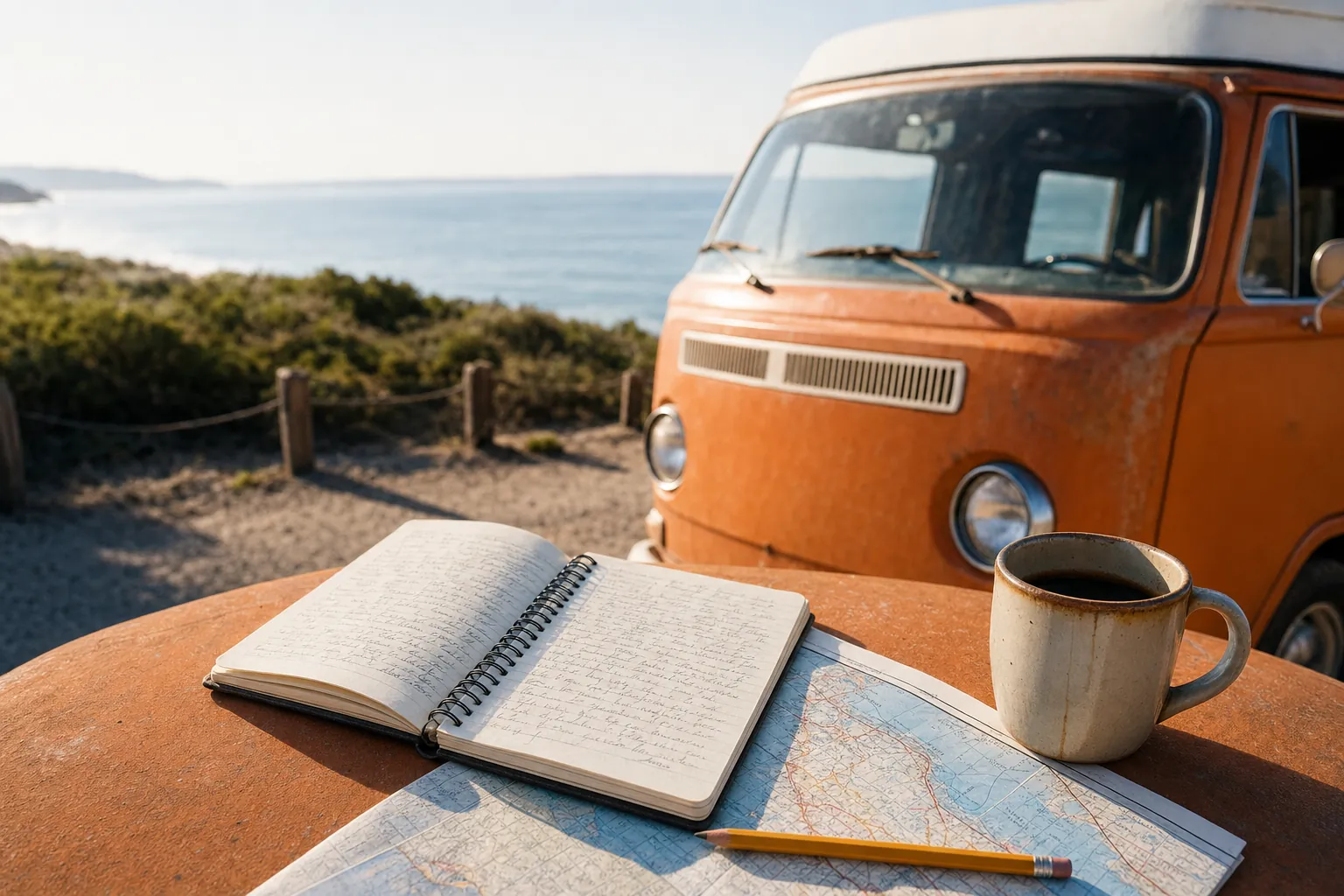
Travel Writing Examples: 5 Short Scenes That Bring a Place Alive
Five short travel writing examples with practical notes on adding vivid detail, tension, voice, and a shape that keeps readers moving.
 Travel Writing
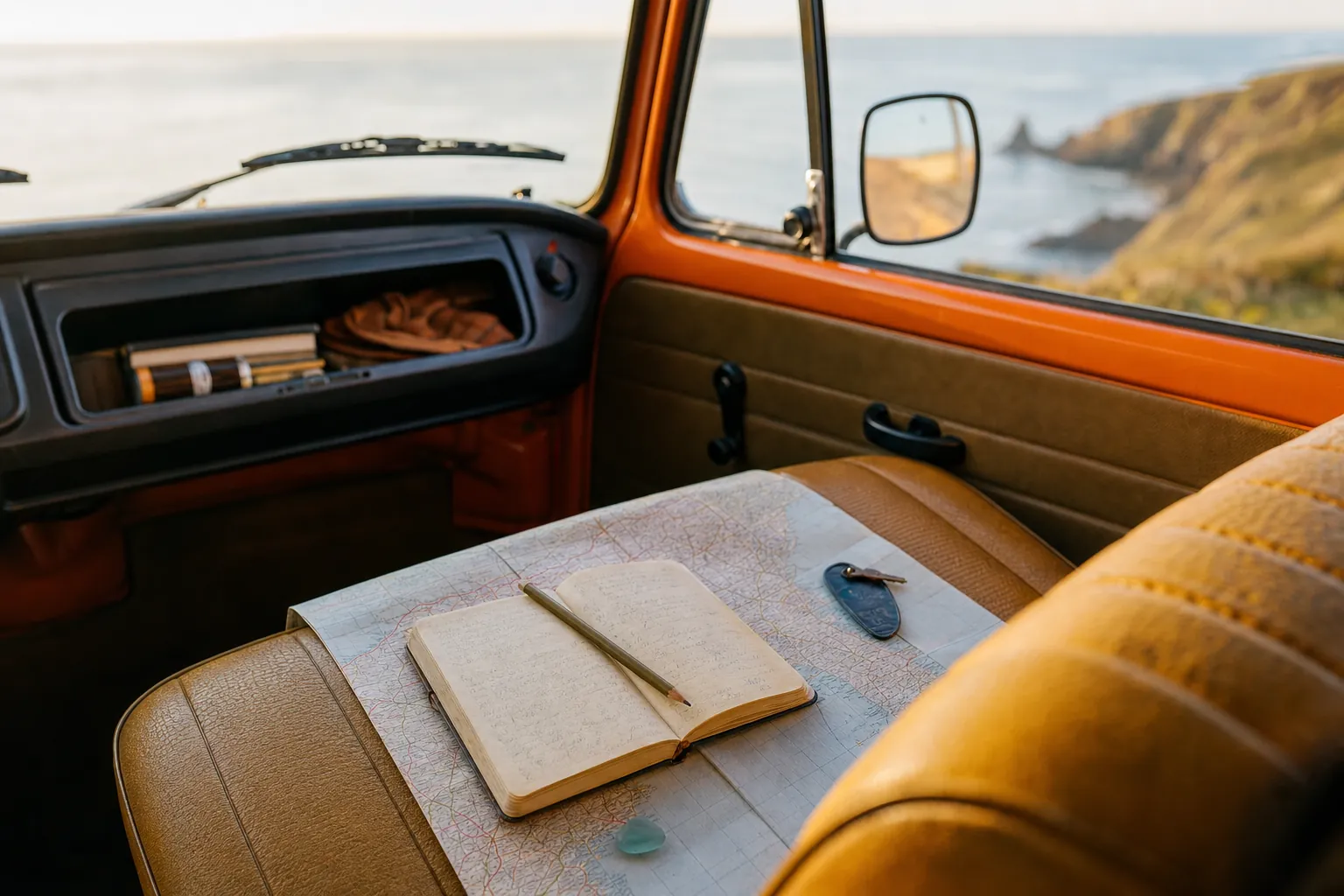
How to Write a Travel Narrative That Goes Somewhere
Learn what a travel narrative is, then turn a trip, detour, or familiar road into a story with a scene and a turning point.
 Travel Writing
How to Write a Travel Article That Takes Readers Along
A scene-first method for turning a real trip into a travel article with a strong angle, useful notes, and a satisfying finish.