
Travel Writing
Good Travel Writing Books: 8 Reads That Make a Journey Matter
Eight good travel writing books to read for vivid scenes, honest encounters, and the kind of journey that stays in the mind after the map is folded.
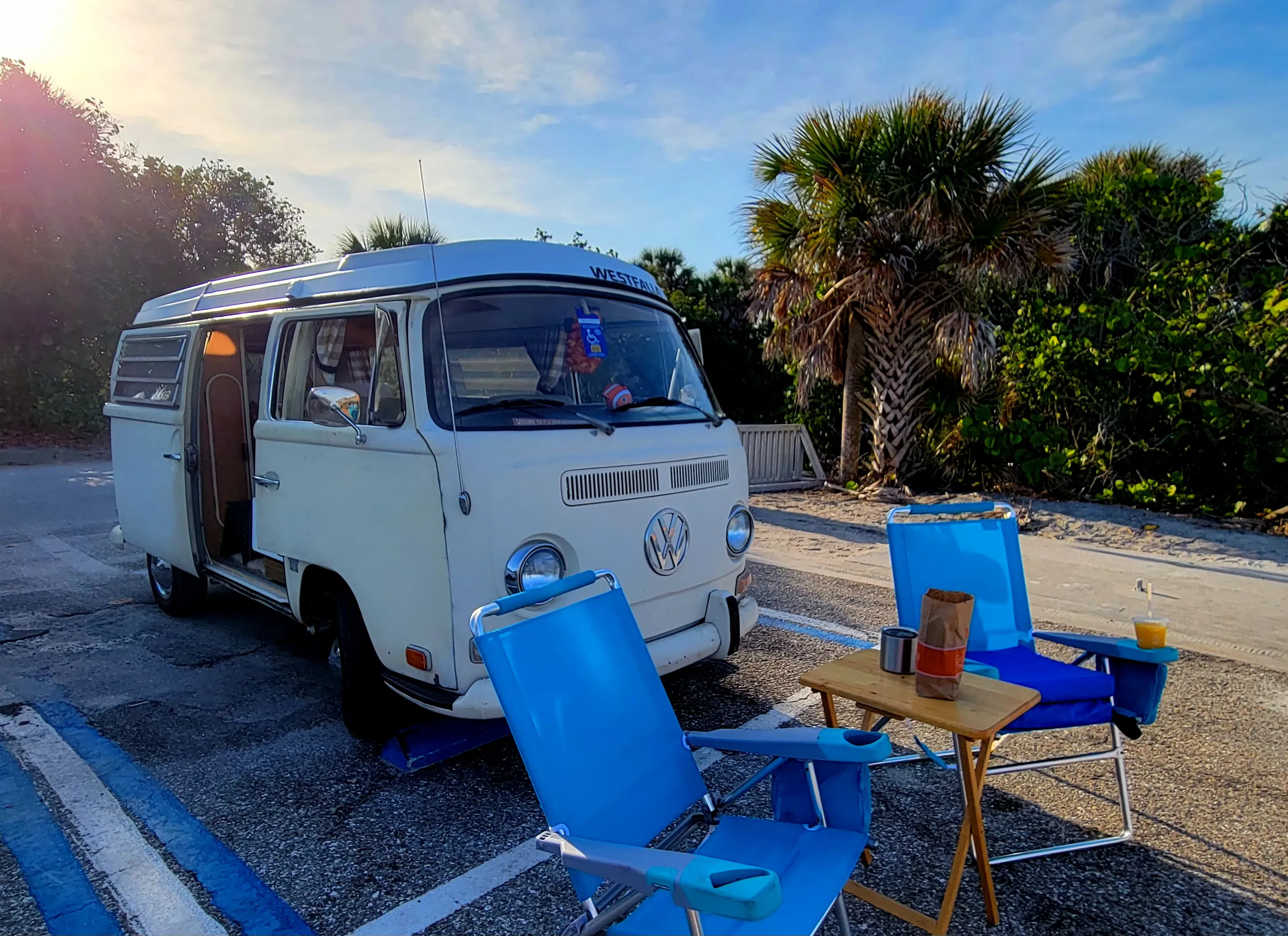
The good travel writing books do not simply take you somewhere else. They make a place feel inhabited. A wet shoe by a motel door, the way someone refuses to answer a question, a bus seat that smells faintly of oranges, the silence after a wrong turn, these are the things that turn movement into memory.
This is not a ranking of the only books that matter. It is a reading shelf built for people who want to see how travel writing works on the page. The eight books below take different routes, from a cross-country drive to a long walk through Europe, from trains to deserts to a hard-earned return home. Read for pleasure first. Then, if you write, return to the passages that made you pause and ask what the author did to earn the feeling.
What to look for in a good travel writing book
Before choosing a title, it helps to know what you want from it. Some books bring the road to life through a sharp comic voice. Others use a journey to examine history, loneliness, friendship, or a changing country. A few are interested in the practical grind of travel, while others linger over the inner weather of the person moving through the landscape.
The shared lesson is that a destination is never enough. Good travel writing has a point of view, a question, and enough lived detail for the reader to enter the scene. If you are studying the craft, keep an eye on three moves: where the writer begins, what interrupts the plan, and what image is left standing at the end. Those are the same choices explored in the Journal’s travel writing examples and travel narrative guide.
1. Travels with Charley by John Steinbeck
John Steinbeck set out across the United States in 1960 in a pickup camper he called Rocinante, accompanied by his poodle, Charley. The journey is the spine, but the book’s real energy comes from attention: overheard speech, bad weather, roadside encounters, and the uneasy feeling that a country may be changing faster than a traveler can understand it. Travels with Charley is a fine place to start because it makes room for the humor and fatigue of being on the road without pretending that a drive can explain an entire nation.
Read it for the way a vehicle becomes part of the story. The camper is not scenery. It influences the writer’s choices, pace, and encounters. That is useful for any road writer. A car, bicycle, ferry, or old VW can be more than transport when it adds pressure, limitation, companionship, or surprise.
2. A Time of Gifts by Patrick Leigh Fermor
At eighteen, Patrick Leigh Fermor walked from the Hook of Holland toward Constantinople in the early 1930s. A Time of Gifts begins that journey with alertness to rooms, rivers, conversations, languages, and the peculiar grace of being welcomed into a place you do not yet understand. It is a book for readers who enjoy sentences that take their time without losing sight of the road.
The practical lesson is curiosity. Fermor notices architecture and history, but he also notices the people in front of him. A travel writer does not need to arrive as an expert. In fact, the more honest approach is often to admit uncertainty, ask better questions, and let a local conversation change the direction of the page.

3. In Patagonia by Bruce Chatwin
Bruce Chatwin’s In Patagonia is restless by design. It moves through South America in short scenes, stories, notes, histories, and encounters rather than settling into one long straight line. The result feels less like an itinerary and more like a cabinet of strange, memorable objects.
That shape is useful for writers with a trip full of fragments. You do not have to force every day into the same weight. A broken-down bus, a story told over dinner, a family rumor, and a landscape can sit beside one another if each piece earns its place. The key is not disorder for its own sake. It is choosing what returns, what connects, and what leaves a small question behind.
4. The Snow Leopard by Peter Matthiessen
Peter Matthiessen travelled to the Himalaya with field biologist George Schaller in search of the snow leopard, but The Snow Leopard does not treat the animal as a prize at the end of a quest. The difficult trek opens into questions of grief, attention, friendship, and what a person is actually looking for when they leave home.
It is a strong choice for writers who want to understand the difference between a subject and a meaning. The outward goal gives a journey shape. The inward question gives it depth. When you draft your own story, ask both: what is the visible reason for the trip, and what is the deeper thing the traveler cannot quite say at the beginning?
5. The Old Patagonian Express by Paul Theroux
Paul Theroux’s long rail journey from Massachusetts to Patagonia is built from stations, sleepers, delays, books, and conversations. In The Old Patagonian Express, the train is a moving room where the writer can watch people arrive, leave, dodge, complain, and tell stories. That constraint gives the book its rhythm.
For a writer, the lesson is that limitations help. A train route, a daily budget, a broken engine, a walking path, or a ferry timetable can create useful pressure. Instead of trying to make every mile exciting, let the restriction reveal character. The wait, the delay, and the uncomfortable seat are often where a travel story starts telling the truth.
6. Arabian Sands by Wilfred Thesiger
Arabian Sands records Wilfred Thesiger’s journeys across the Arabian Peninsula in the 1940s. It is a demanding book, and it deserves to be read with its historical distance in view. That distance is part of the lesson: travel writing is never neutral. A writer carries an era, a background, a set of assumptions, and a degree of access into every scene.
Read it not as a template to imitate but as a prompt to ask better questions of any narrator, including yourself. Who gets to speak? What does the writer know directly, and what do they assume? What has been described with care, and what has been flattened? Good travel writing has the nerve to observe closely and the humility to recognise the limits of its view.
7. The Rings of Saturn by W. G. Sebald
In The Rings of Saturn, W. G. Sebald walks along the English coast, then allows the route to open into history, art, memory, and association. The book is an unusual travel companion because it proves that a journey can be as much about where the mind goes as where the feet go.
This is a book for anyone whose notes seem to wander. A walk can lead to a family story, an old photograph, a newspaper clipping, or a thought about a lost place. The trick is to give those turns a return path. Let a shore, a building, or an object pull the reader back to the physical world so the page does not drift away entirely.
8. The Art of Travel by Alain de Botton
Alain de Botton’s The Art of Travel is less a single trip than a thoughtful companion to the urge to go somewhere else. It asks why anticipation can be so powerful, why ordinary places can become newly visible, and how art changes the way we look at a room, a road, or a view from a train.
Its most useful reminder is that attention can be practised near home. You do not need an exotic destination to write a travel story. Start with the route you take for granted, the beach you knew as a child, the diner where the same person sits every morning, or a local road after rain. The Journal’s guide to starting travel writing offers a simple way to make that first page less intimidating.

Choose the book that matches the question you are carrying
A reading list becomes more useful when you choose by need rather than by reputation alone. If you want to understand the American road, Steinbeck gives you motion, conversation, and a changing landscape. If you want to see how a long walk can hold history and wonder, Fermor is a patient companion. If your own notes come home in fragments, Chatwin shows that a mosaic can still have direction.
Matthiessen is the book to take up when a physical journey contains a deeper private question. Theroux is for the writer who needs permission to let inconvenience, waiting, and fellow travellers carry a chapter. Thesiger asks you to read critically, to notice how a narrator's position shapes every scene. Sebald is for the restless mind, and de Botton is for the person who suspects that close attention can begin before the journey does.
You do not need to agree with every writer to learn from them. In fact, disagreement can be productive. When a passage feels too certain, too detached, too enchanted by difficulty, or too willing to turn people into background, stop there. Ask how you would report the same moment. That pause is part of becoming a more responsible reader and a more honest writer.
What these books teach about place, people, and permission
Travel writing is tempting because it offers scenery. Its harder work is making sure the scenery does not turn into a backdrop for the writer's ego. The strongest books in this list keep moving between an outer world and an inner life. A town matters because of how it is encountered, but the traveler’s response is not the whole story. Other people are not there to decorate an adventure.
That balance takes humility. Write down what you actually saw. Attribute what someone told you. Check a fact before building a reflection on it. When a short visit cannot support a big claim, keep the claim small. Travel writers are at their best when they notice keenly without pretending to own the place they have passed through.
It also takes permission to leave some material out. A trip has many meals, miles, and photographs that will not become part of the story. A reader does not need proof that you were busy. They need the handful of moments that show what changed. The travel writing structure guide can help when the notes are good but the shape has not yet appeared.
A simple month of reading and writing
If eight books feel like a mountain, make a small practice instead of a large promise. Choose one book and one chapter a week. In the first week, read for pleasure and write down one image that has stayed with you. In the second, reread the chapter and mark the first point where the writer places you physically in a scene. In the third, write a page from one of your own journeys using only concrete details. In the fourth, revise that page by cutting broad labels and keeping the objects, sounds, and gestures that carry the feeling.
This approach is gentler than trying to finish a whole manuscript after reading one beautiful paragraph. It also respects the fact that travel writing is a practice of return. You return to the notes, to the photographs, to the object in a drawer, and to the moment that still asks for another look. A good book does not hand you a formula. It sends you back to your own material with better questions.
How to read these books like a travel writer
Do not try to borrow another writer’s voice. That tends to produce a costume, not a story. Borrow their questions instead. Mark the first paragraph where you feel located in a place. Notice the moment a plan changes. Circle one detail that you can still see after closing the book. Then ask what the author did before and after it.
- Read one chapter for the journey. Let the writer carry you without stopping to analyse the machinery.
- Read it again for structure. Where does the writer slow into scene and where do they move quickly through time?
- Notice the evidence. What detail makes you trust the place, the person, or the feeling?
- Find the turn. A story changes when weather, news, money, memory, or another person shifts the route.
- Write one small response. Do not summarise the book. Write the memory, road, or question it brought back to you.
If you want a practical next step after the reading, try one of the Journal’s short travel writing exercises. A ten-minute scene built around an arrival, an object, or a wrong turn is enough to test what you have noticed.
Three traps worth leaving on the roadside
The postcard sentence. A place is not made vivid by calling it beautiful, magical, hidden, or unforgettable. Those words make the reader do all the work. Replace them with what made you reach for the label: a wet railing, a wall painted the colour of a peeled orange, a smell of diesel at the dock, the silence of a street after the shops close. Specific evidence is kinder to both the reader and the place.
The complete itinerary. A travel story is not a duty-free bag of every stop. If a day contains four ordinary hours and one awkward conversation that changes the trip, give the conversation the room. Summary is not failure. It is how a writer moves past the necessary miles so the meaningful scene can breathe.
The borrowed voice. Reading a brilliant travel writer can make a person suddenly want longer sentences, grander weather, or a more adventurous self. Resist it. Keep the rhythm of your own observation. G.J.’s travel article guide is useful here because it starts with an angle and real notes, not an imitation of someone else’s tone. The best thing these books can give you is not a pose. It is courage to pay closer attention to the road you actually travelled.
Keep a reader’s notebook, not a scorecard
There is no need to decide which of these books is the greatest. Lists can be useful doorways, but a scorecard makes reading smaller. Use a notebook instead. Give each book one page and write down the passage that made you feel the weather, the person whose presence changed the scene, the question that the journey left unresolved, and one craft choice you can try in your own work.
Over time, that notebook becomes a map of your taste. You may discover that you prefer the patient walker to the quick observer, the train compartment to the open road, the sentence that whispers to the sentence that performs. None of those preferences is a rule. They are clues about the kind of attention you want your own writing to offer a reader.
Bring that preference back to the next trip, however short it may be. Notice one thing before reaching for a camera. Ask one question you would normally leave unasked. Write down one line before the day has been polished into a story. Then keep it, even if it seems too small at first, because small details are usually where the lasting story begins and readers remember them long after the destination fades. That is enough material for a beginning.
From reading the road to writing your own
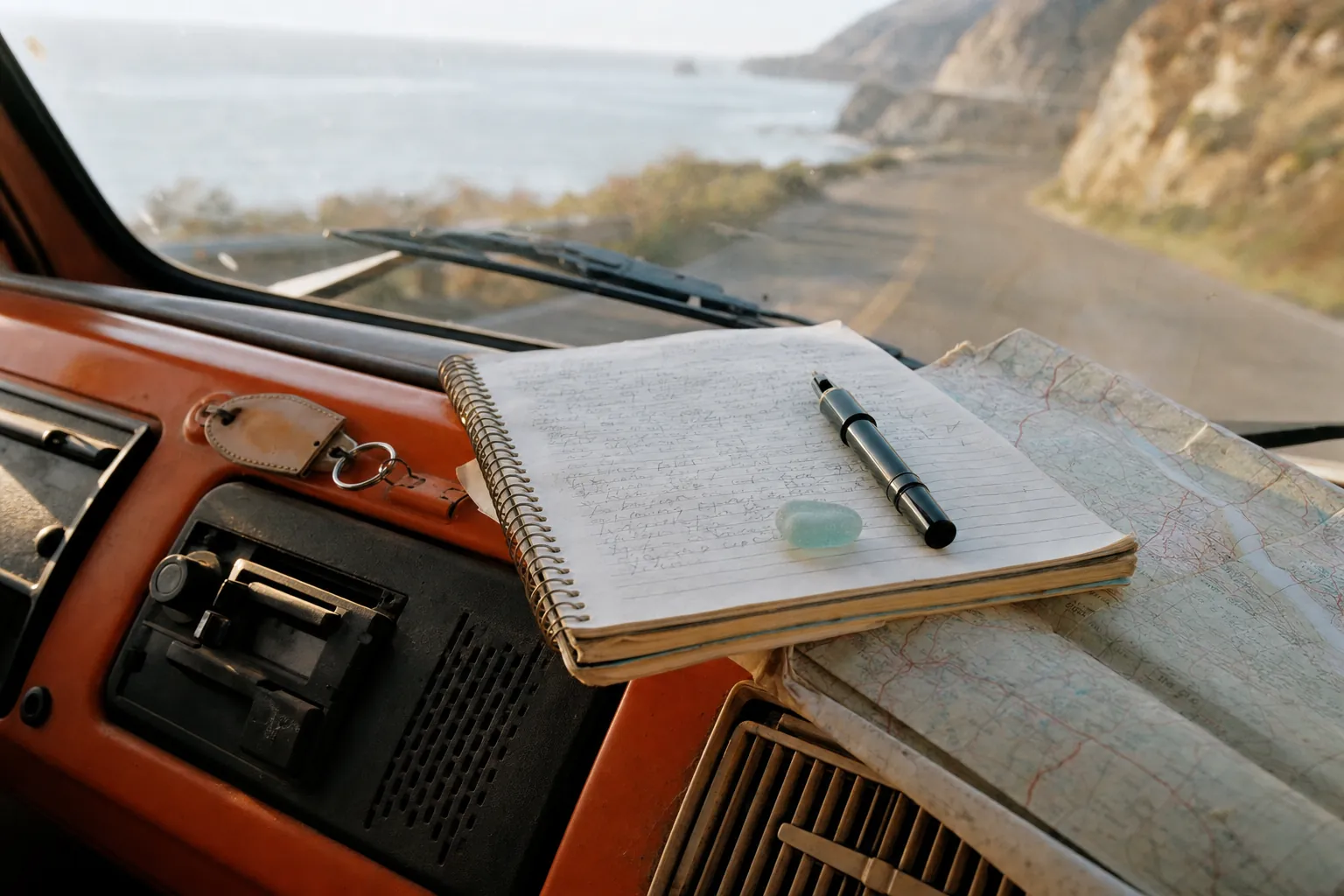
Blue Sea Glass belongs to this larger conversation in a modest, personal way. G.J. Dürrschmidt writes from the long view of roads, Key West, memory, humour, and the stubborn personalities of old vehicles. Kaspar, his 1970 Volkswagen camper, is not a borrowed symbol. He is a real travelling companion with his own breakdowns, repairs, and habits.
For a road book that pairs pictures with poems, explore Prelude to a Groovy Road Trip. For more original pieces where a memory, place, or found object gets room to speak, begin with the writing archive. The point of reading travel writing is not to become a smaller version of someone else. It is to return to your own road with sharper eyes.
Frequently asked questions
Travel writing book questions
What makes a travel writing book worth reading?
A good travel writing book does more than collect destinations. It gives you a particular mind at work, a place rendered in concrete detail, and a journey with pressure or change. The best ones make you care about a missed train, an awkward meal, a difficult border, or a quiet walk because the writer has made the moment specific.
Are travel books and travel guides the same thing?
No. A guide helps you decide where to go and what to do. A travel book makes an experience of place through scene, voice, memory, history, and encounter. A book can be useful before a trip, but its first job is usually to let you see a place through the writer's attention.
Which travel writing books are best for a new writer to study?
Start with a book whose pace and scale feel possible. Read one chapter twice: once for the trip itself, then again to notice where the writer slows down for a scene, supplies background, records dialogue, or moves through ordinary miles quickly. A notebook beside the book is more useful than trying to copy its voice.
Can a road trip make good travel writing?
Absolutely. A road trip brings built-in motion, changing weather, wrong turns, and chances for a familiar object or vehicle to become part of the story. The route does not need to be grand. What matters is the moment that changes the traveler, the plan, or the way a place is seen.
Keep wandering
Related posts
 Travel Writing
Travel Writing Examples: 5 Short Scenes That Bring a Place Alive
Five short travel writing examples with practical notes on adding vivid detail, tension, voice, and a shape that keeps readers moving.
 Travel Writing
How to Write a Travel Narrative: A Step-by-Step Guide
Learn how to write a travel narrative with a clear scene, a turning point, and an ending that shows what changed.
 Travel Writing
How to Write a Travel Article That Takes Readers Along
A scene-first method for turning a real trip into a travel article with a strong angle, useful notes, and a satisfying finish.